Mai Child of Ages | Switch Review
Sometimes, our fearless leader, Scott Clark, receives unsolicited codes from publishers hopeful to get some additional eyes on their game. Chubby Pixel brought us Mai: Child of Ages. I was familiar with this game already because a developer from Chubby Pixel (MalboM) is doing a decent job promoting the game on the fantastic video game social media site/app, Fuze. Putting those two together, I agreed to take the code and give the game a try.
There is no denying the Breath of the Wild inspiration in design, but otherwise Mai: Child of Ages is a decent game and a fine way to spend $15 given its twelve-hour runtime.

A Story About Family and Time
Mai: Child of Ages is an indie action-adventure puzzle platformer following Mai as she searches for answers about her past, her family, and the world she has inherited. At its core, this is a story about identity, family, and the lingering consequences of a world shaped by war. Mai is trying to save her grandfather, but in doing so, she also uncovers truths about herself, the aftermath of the Last Great War, and the nature of time itself.
The game’s central hook is built around switching between Mai as a child and Mai as an adult, with each version handling the world very differently. As a child, the focus leans heavily toward puzzle-solving and platforming. As an adult, combat takes center stage. Regardless of age, this structure will feel immediately familiar to anyone who has played a modern Zelda game. Dungeon-style exploration, environmental puzzles, light platforming, and hack-and-slash combat all live comfortably within the framework.
The story itself is better than I expected, especially considering how the bright and friendly visuals imply simplicity. There is a surprising emotional weight beneath the surface, particularly in how the game explores family bonds and long-term consequences. That said, the pacing does not always do the narrative any favors. Dialogue and story beats take their time, sometimes too much time, which can make the journey feel longer than it needs to be.
Time travel is hardly a new concept in games, but Mai: Child of Ages uses it well enough to keep things interesting. Traveling between different environments helps maintain variety. Lush forests, colorful islands, and bleak industrial spaces each offer a distinct mood, and the contrast between them reinforces the game’s themes nicely.
Ideas That Work Better in Theory
From a gameplay perspective, the time alteration mechanics are easily the most compelling element. Shifting between past and future to progress forward is satisfying at first. Being blocked as an adult is as simple as going back in time to the child Mai and altering the environment. Then switch back to adult Mai and, voila, the path is open now! In addition, the split between puzzle-focused sections and combat-heavy moments makes sense on paper.

However, as I continued to play the game, I found that neither the time alteration nor the gameplay mechanic differences were knocking it out of the park. The puzzles tend to be straightforward and rarely evolve into something truly clever. Combat, while serviceable, feels shallow and repetitive over time. On top of that, technical hiccups occasionally get in the way. Bugs slowed my progress more than once, adding friction to an experience that already struggles with momentum.
A Colorful World With Rough Edges
Visually, the game does a lot right. The Disney-like art style contrasts nicely with the heavier themes, and the environments are colorful and inviting. The use of contrast between locations is one of the game’s strengths, helping each island feel distinct. I was also pleasantly surprised by the cloth physics, which add a bit of life to Mai’s movement as she moves quickly through the world.
Unfortunately, some rough animations and strange enemy designs hold the presentation back. These issues are not just cosmetic either, as they occasionally affect gameplay clarity and responsiveness.
If there is one area where Mai: Child of Ages truly shines, it is the audio. The music does a fantastic job of setting the tone and breathing life into exploration. Each area feels more vibrant because of its soundtrack, and it often carries moments that might have otherwise felt dull. It was impressive enough for the gamemakers to include the soundtrack as a buyable option on Steam.
Sound effects are solid across the board, and I had very few complaints here. My only lingering wish is that the game included voice acting. Given how story-driven the experience is, spoken dialogue could have elevated the emotional moments significantly.

Mai: Child of Ages Final Thoughts
For its price, Mai: Child of Ages offers a generous amount of content. There is easily over twenty hours of gameplay when factoring in side activities, and that value is hard to ignore. Mainlining the game is approximately twelve hours. Still, pacing issues and a lack of clear direction become more noticeable as the game opens up, especially for players who prefer a stronger sense of guidance.
By the time the credits rolled, I walked away feeling that Mai: Child of Ages is a well-intentioned game held back by its execution. Its identity shines through in its presentation and story, and the emotional core is strong enough to keep you invested. While the gameplay introduces interesting ideas through time manipulation and dual-age mechanics, repetition and clunkiness prevent it from reaching its full potential. For the right player, there is a meaningful journey here. It just takes patience to get there.
To hear me talk more about Mai: Child of Ages, be sure to listen to the October 7th, 2025 episode of The Gaming Outsider Podcast around the 1:09:20 time stamp.
This review is based on a Nintendo Switch copy of Mai: Child of Ages provided by Chubby Pixel for coverage purposes. It is also available on Xbox, PlayStation, and PC.
Mai: Child of Ages
$14.99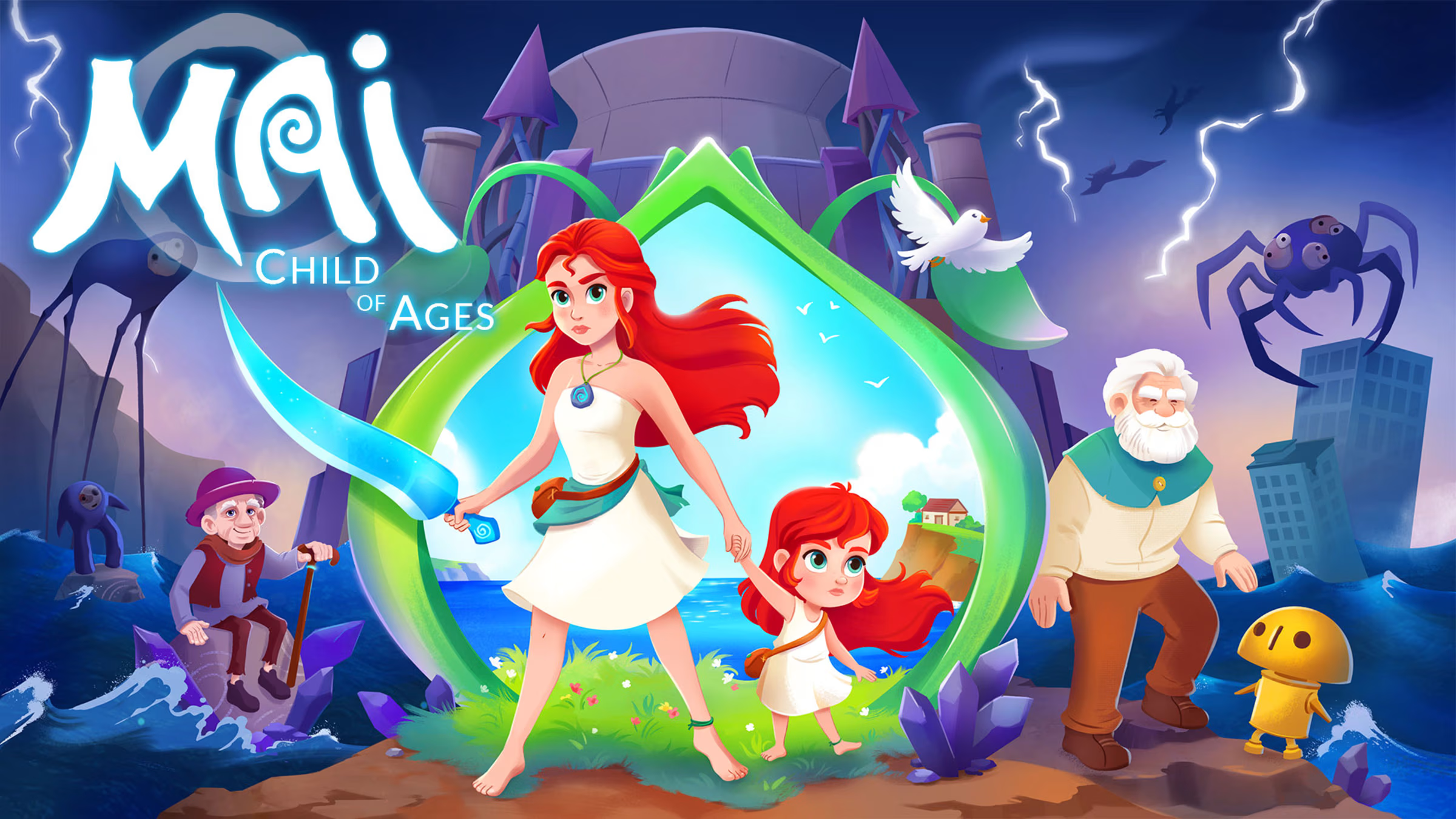
Pros
- Strong Emotional Story With Meaningful Themes
- Beautiful Environments And Memorable Music
- Clever Time Travel Concept
Cons
- Slow Pacing And Unclear Direction
- Shallow Combat And Simple Puzzles
- Occasional Technical Issues
