MIO: Memories in Orbit | Switch Review
Are you looking for a new metroidvania after conquering Silksong? Do you enjoy pain, torment, and cute little robots? Are colorful, yet bleak sci-fi settings your cup of tea? Then welcome to your new interstellar destination! In orbit.

Galactic Adventure
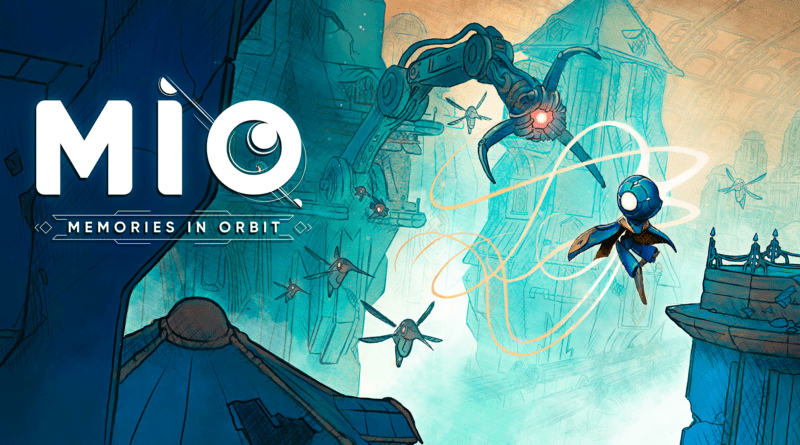
MIO: Memories In Orbit is set on a colony ship, once tasked with ferrying mankind across the stars to a new home world. Of course everything’s busted by the time the game starts, with nothing left but the caretaker machines running about the place. MIO’s objective is simple: find out what happened and get the administrator bots (Breath, Blood, Hand, etc.) back in line.
Naturally you’ll do this by exploring the abandoned but gorgeous starship, with different locales and hazards based on the local administrator, defeat powerful bosses, and unlock new abilities that allow you to explore further. Explore new areas, find places you can’t reach, mark them on the map until you get a movement upgrade that lets you go there. Standard metroidvania gameplay loop. MIO sets itself apart with a modular upgrade system that lets you hotswap abilities, from basic stuff like having a UI to begin with, or seeing enemy health bars, along with more impactful powers like increasing damage the more damage you’ve taken. However, none of these upgrades are as impactful as giving yourself one more slot of armor, or increasing your damage combo, so these two are unlikely to leave your setup, and as such there’s not really as much room to experiment as it may seem.
Hell in Space
This is because MIO is, by design, quite a brutal game. Unlike any given Soulslike, MIO cannot self-heal. Unlike any given metroidvania, enemies don’t drop health. You restore health by finding repair stations which, unless you’ve equipped the upgrade to eliminate it, cost money to use. These are few and far between, and not always in front of boss arenas. Likewise, savepoints are sparse, especially in the first few hours when you only have one centrally located respawn point. You do eventually unlock one or two additional respawn points per area, but death still feels quite punishing, doubly so by the fact that you lose all your money when you die. There’s two forms of currency in the game: nacre droplets, and the crystalized form, which is permanent. Any droplets you were carrying when you die? Gone. Forever. No corpse runs in MIO. While there are (very few) stations where you can crystalize your money and make it permanent, it still discourages fighting enemies when any money you find is likely going to vanish if/when you encounter a boss or platforming section.

Those platforming sections? They can be rough. The challenges they provided always felt like both the high point of MIO as well as a source of major frustration. They follow the scheme of requiring you to use your unlocked abilities in a very specific sequence, gliding across a hazard pit and hitting a bulb to recharge your energy and double jump, letting you grapple a point and fling yourself to another bulb to recharge and so on and so forth until you hit solid ground. The fact that you can’t heal makes these doubly stressful, as a few wrong moves can mean having to run all the way back only to get bodied again by the necessary precision.
At the same time, these challenges felt the most rewarding when finally accomplished, especially since they mean either progression or some form of upgrade. They were certainly more rewarding than the game’s boss battles, which at times felt either a slog or tuned toward being unfair to the player. Bosses have a truckload of health, and not being able to heal mid-fight means it’s more of an endurance challenge than anything else.
Making It Easy
All of this combined makes a game that feels excessively punishing, yet it also includes assist options that alleviate this somewhat. You can make bosses rusted, reducing their maximum health each time you die, make all enemies non-hostile until/unless you attack them, and give MIO a one-hit buff if they stay on the ground for a few seconds. After the first few hours of the game I simply turned on all of these assists, and it turned the game from a very arduous and grinding process to a much more enjoyable metroidvania. They basically resolved the main complaints I had with the game: Absurdly difficult platforming challenges no longer required a runback, since MIO could regenerate a shield after a few seconds. Bosses, after four or five deaths, weren’t quite as chunky, and knowing their moveset was enough to finish the fight, and in less than ten minutes. The enemy passivity was in fact less impactful than anticipated because the game doesn’t put enemies in every room. More often the environment is the enemy. It just felt better to focus on exploring the world. Plus on backtracking routes, having passive enemies makes things much quicker.

Space is Pretty
That world is gorgeous, too. This game exemplifies the idea that art design surpasses texture quality. It’s absolutely beautiful, and the background details make it even more impactful. The frozen Metropolis area really gives a sense of the scale of the colony ship, and how much was lost by the time MIO came online. It felt fun to simply wander around and explore, especially when unburdened by the stress of whether or not I could find a crystallization machine to keep my money from vanishing.
Whether or not you pick up MIO: Memories in Orbit should not be determined by whether or not you enjoy a good metroidvania. MIO is a good metroidvania. It’s also a very difficult one, and at times it doesn’t earn that. The combat is not varied enough for bosses to be so tanky. The sparsity of save points makes the world more punishing than similar games in the genre, especially with how the platforming ramps up later in the game. Yet it’s absolutely beautiful, with a lovely accompanying soundtrack, and it nails the feeling of being a small robot lost in a big spaceship against foes ten times or even a hundred times your size. It’s not perfect, but it doesn’t need to be perfect. It’s fun, and draws you in with its world and characters, and gives you options to sand down its sharp edges. Just know that even then, MIO won’t hold your hand.
To hear me talk more about MIO: Memories in Orbit, listen to the January 21st episode of The Gaming Outsider Podcast around the 1:06:10 time stamp.
This review is based on a Nintendo Switch copy of MIO: Memories in Orbit provided by Sandbox Strategies for coverage purposes. It is also available on Xbox, PlayStation, and PC.
MIO: Memories in Orbit
$19.99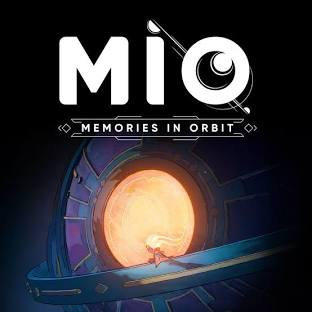
Pros
- Beautiful World
- Poignant Soundtrack
- Solid Gameplay Loop of Exploration and New Abilities
- Challenging Platforming
- Assist Options
Cons
- Somewhat Basic Combat
- Punishing Design Choices, Bordering on Frustration
- Rather Sparse Story