Blossom: The Seed of Life | PC Review
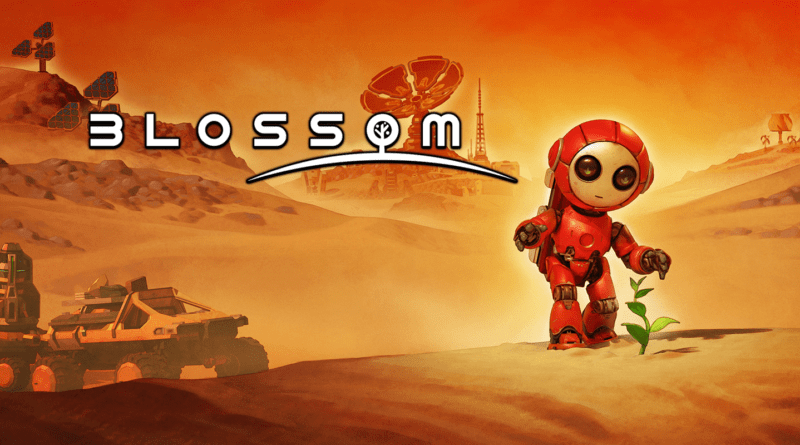
Since time immemorial, mankind has looked up at the stars and wondered. Wondered whether we would ever reach such lofty heights. Wonder if life existed out there in the void. Wondered what that tiny robot is doing, puttering around on the surface of Mars, 3D-printing giant wind turbines like they’re party favors. Blossom: The Seed of Life from Pebbledust Games, attempts to answer those questions, as you revitalize a dead planet.
Familiar Trappings
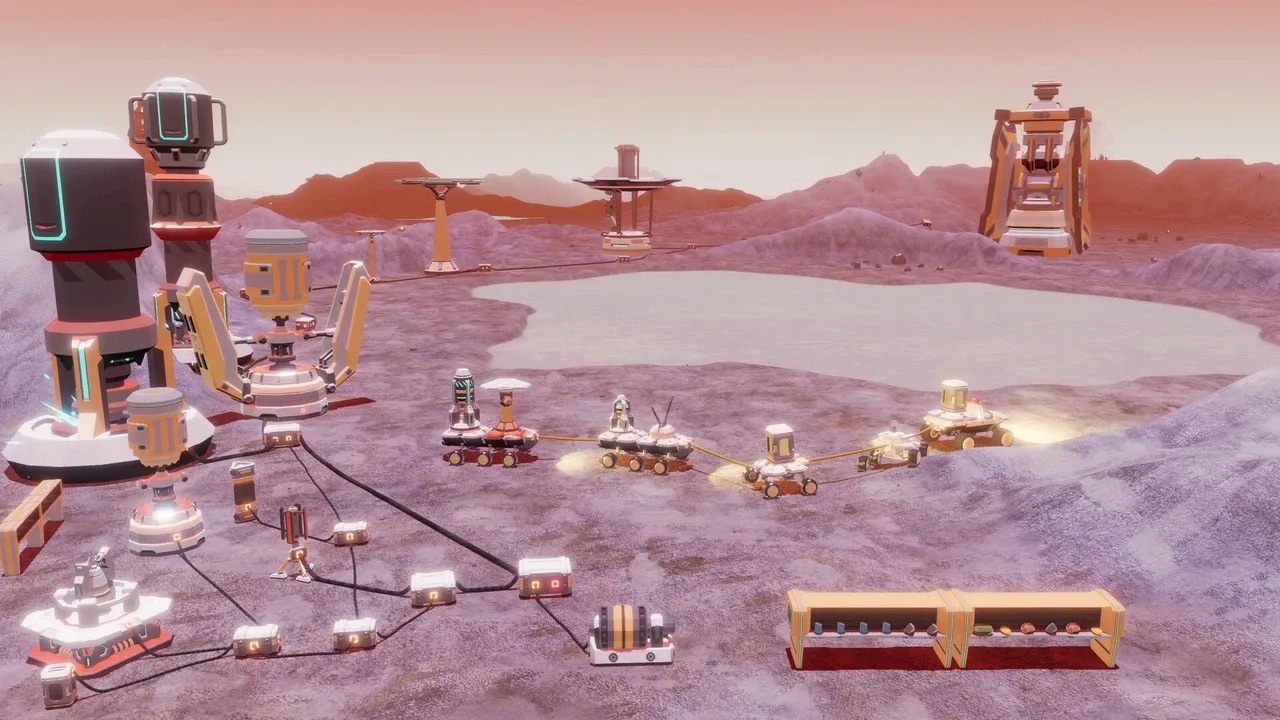
Blossom starts you off pretty similar to a lot of survival games: you wake up in a dark place, turn the lights on, walk out onto an alien landscape, and start shooting things with a laser and turning them into other things. Your objective, understated as it is, is to bring life to the Red Planet. This is not the easiest task, as Mars is completely inhospitable to biological life, with no atmosphere, no liquid water, and temperatures well below freezing. Fortunately, you’re a tiny robot and all you need is some electricity and some gumption to literally change the world.
The basic gameplay loop is similar to other survival slash factory games: gather resources, build structures like power generators and terraforming devices to alter the planet, and as you progress through the terraforming tiers, you gradually unlock blueprints for more advanced machinery you can use to either terraform faster or take on brand new tasks. It’s your standard dopamine drip skinner box treadmill, and it works on a basic level to keep you engaged and progressing.
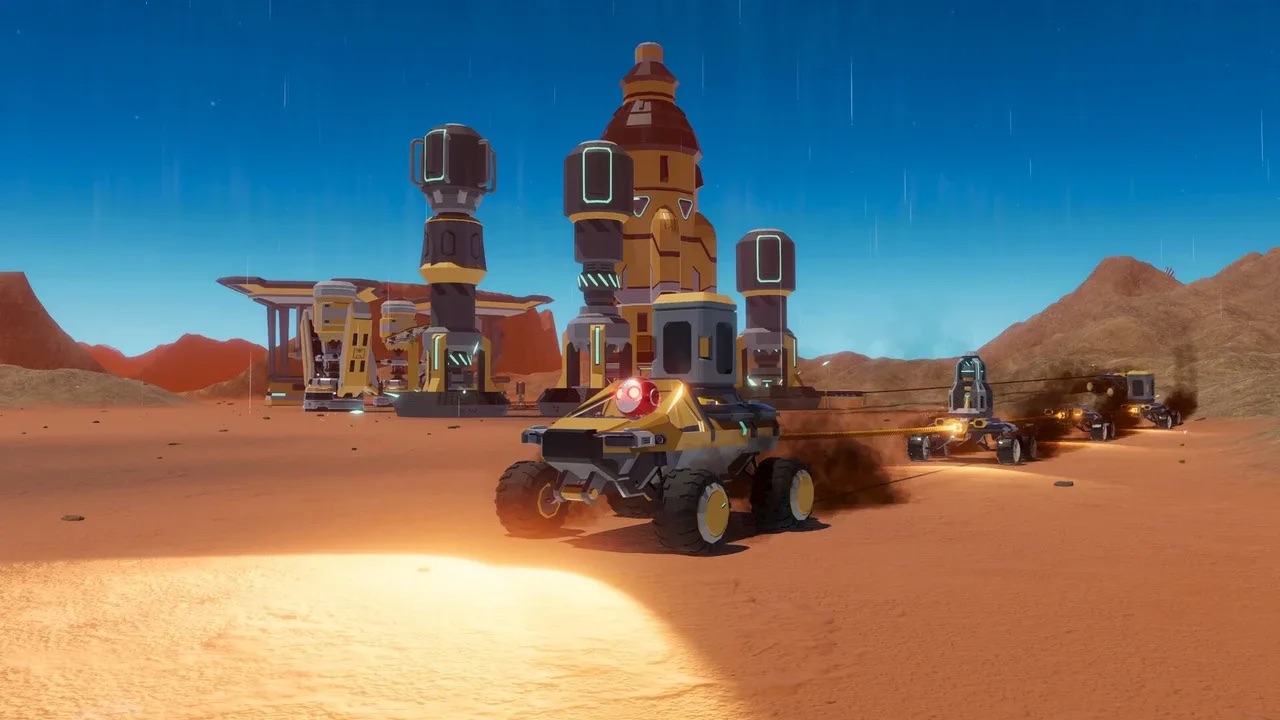
One additional layer of complexity is that everything in the game is tied to power, including the titular Blossom. Simply walking around consumes some battery power on your little bot. Running uses slightly more than walking. Using the mining laser consumes even more power, and so on. Run out of power and you “die,” with another Blossom 3D-printed back at base. It works as a mechanic to keep the player from straying too far at first, and eventually once you unlock wagons and rovers, you’ll be able to carry around batteries and portable machines and have more than enough juice for extended excursions along Mars’ surface. That, combined with perpetual power methods like solar panels and wind turbines, gradually turns the game from survival into base expansion to support the terraforming efforts.
Welcome to Mars
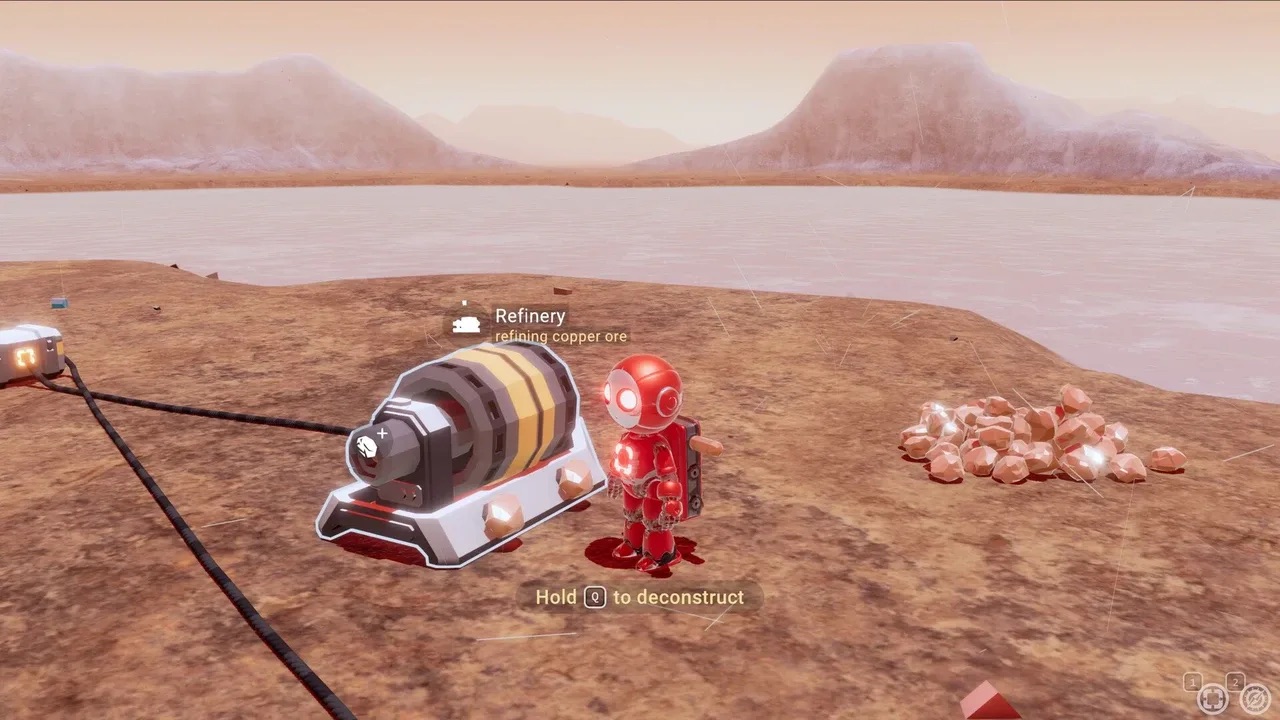
That said, the game has a number of flaws that impede gameplay, starting with Mars itself. The landscape is visually uninteresting, and only changes in superficial ways as you progress in your terraforming odyssey. There are remnants of technology littered about that will provide blueprints or “memories” for Blossom to download and expand on the game’s lore, but overall it’s quite repetitive and dull. Simple hills and craters gradually change color as you terraform the planet, with the latter turning into ice and then lakes, but there’s nothing particularly special about one corner of the map than the other. Nothing you find feels special or unique.
What’s more frustrating, however, are the UI and controls. The game has no “snap” mechanic, so it is freeform, yet annoying if you want everything lined up nicely. If you’re playing with a controller, any machine you want to place is a fixed distance from Blossom, so putting things down exactly where you want it is a challenge in and of itself. While you can find blueprints to build yourself a habitat and expand and decorate it how you like, there’s little purpose to this. It’s too small to expand your base inside the habitat, and you’ll spend most of your time exploring anyway. If you want to build a space home it’s fine, but it feels like something added just for the sake of having the feature rather than something integrated into the game.
Inventory management is also an area that could have used more polish. When you first start the game, you have a backpack that allows you to pick up four things. Not four stacks of something. Four items. Period. You do quickly expand this to eight, but even the external storage solutions the game provides are more clunky and frustrating than they should be, as they use the same limited slots. It is, in fact, far easier to just drop all your collected resources on the ground in their own individual piles, than it is to waste resources building shelving that is neither intuitive nor quick to use.
Bottom Line
Unfortunately, these basic things bring down the experience and make it hard to recommend Blossom. There are some positives: gradually seeing Mars change as you increase atmospheric pressure or the planet’s temperature is gratifying, as is eventually building out a fully-decked daisy-chained rover and wagon convoy capable of building a whole new base anywhere on the map. It’s not a bad game, especially at the $18 launch price, and with a little polish it could be an enjoyable experience, like a bite-sized Satisfactory, but with loneliness.
Note: This review was written based on a pre-release copy of the game. The developer has promised updates and this review may not reflect any future changes to the game.
To hear me talk more about Blossom: The Seed of Life, be sure to listen to the March 17th episode of The Gaming Outsider Podcast around the 1:00:09 time stamp.
This review is based on a PC copy of Blossom: The Seed of Life provided by Pretty Soon Games for coverage purposes. As of this writing, it is exclusive to the platform.
Blossom: The Seed of Life
$16.99
Pros
- Solid Gameplay Loop of Resource Gathering and New Unlocks
- Restoring Mars Feels Satisfying, Even if the Planet Itself Doesn’t Change Dramatically
Cons
- In-Game Inventory Management is Next to Useless
- The Mars Landscape is Uninteresting for Exploration
- Basebuilding is Messy and at Times Frustrating