Fallen Tear: The Ascension | PC Early Access Review
Prince of Persia: The Lost Crown was my 2024 Game of the Year. It did more than just entertain me; it opened a window to a massive variety of other gear-gated games. Over the last two years, I have played a few good ones and quite a few bummers. Despite the variety, nothing truly recaptured the magical experience I had with The Lost Crown back in January of 2024. That changed when I found Fallen Tear: The Ascension. This is everything I have wanted in a Metroidvania since my time with Sargon.
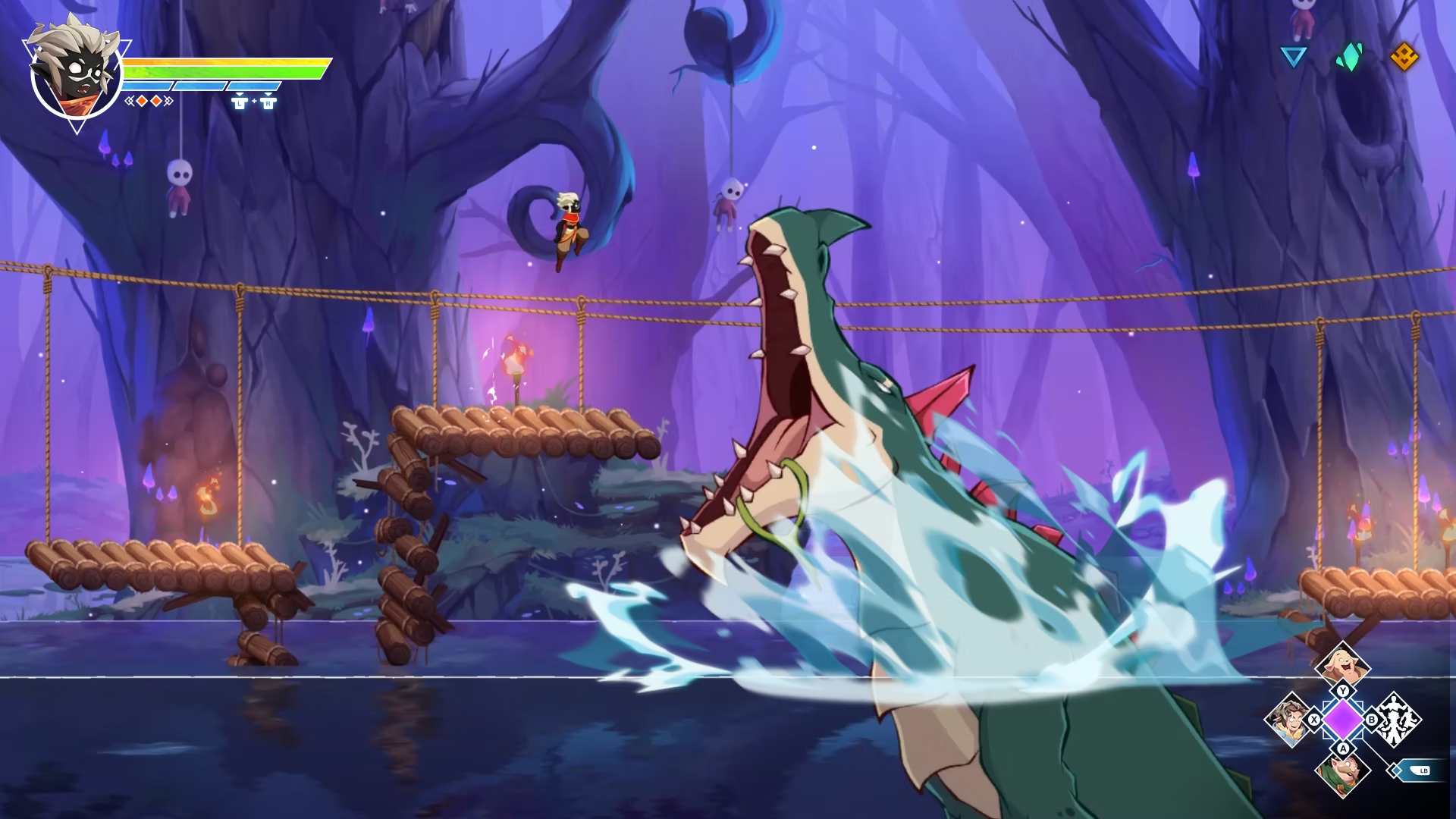
Story
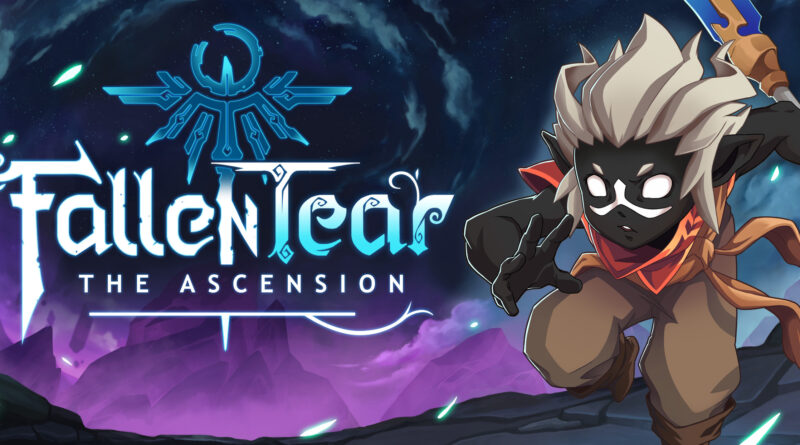
In Fallen Tear: The Ascension, you play as Hira, a mysterious young boy who was found as an infant in a ruined temple and raised by a local woman named Miah. While he seems like an ordinary orphan, he actually carries a legendary power that is just starting to wake up. The world of Raoah is currently falling apart because the very gods who used to protect it have become corrupt and are tearing everything down.
Hira has to leave his home and his adoptive brother, Ravn, to travel across a massive, changing world to find the “Ascensions” and recruit a team of allies called Fated Bonds. It is a race against time to stop the elemental gods and find out the truth about Hira’s origins. It is a high-stakes origin story that feels much bigger and more personal than your average “save the world” plot.
Gameplay and Mechanics
Like most gear-gated games, your abilities unlock as you progress. You start with a basic jump and attack, and you learn to dodge shortly after. A really interesting wrinkle appears with the next unlockable: the game gives you a choice. You only have enough skill points to unlock either the dash or the double jump. This decision dictates which direction you explore first. I assume that further into the game, there will be enough skill points to unlock the other ability and journey back to those blocked areas, but the initial choice adds a great sense of agency.
The controls are fantastic. The character interactions with the environment are equally incredible. In many ability or battle-focused games, including my beloved The Lost Crown, I sometimes found myself frustrated. I would miss a ledge I felt I should have hit, or know I timed an attack perfectly only for the enemy to win anyway. That did not happen a single time here. Every movement and strike felt precise, and it was glorious.
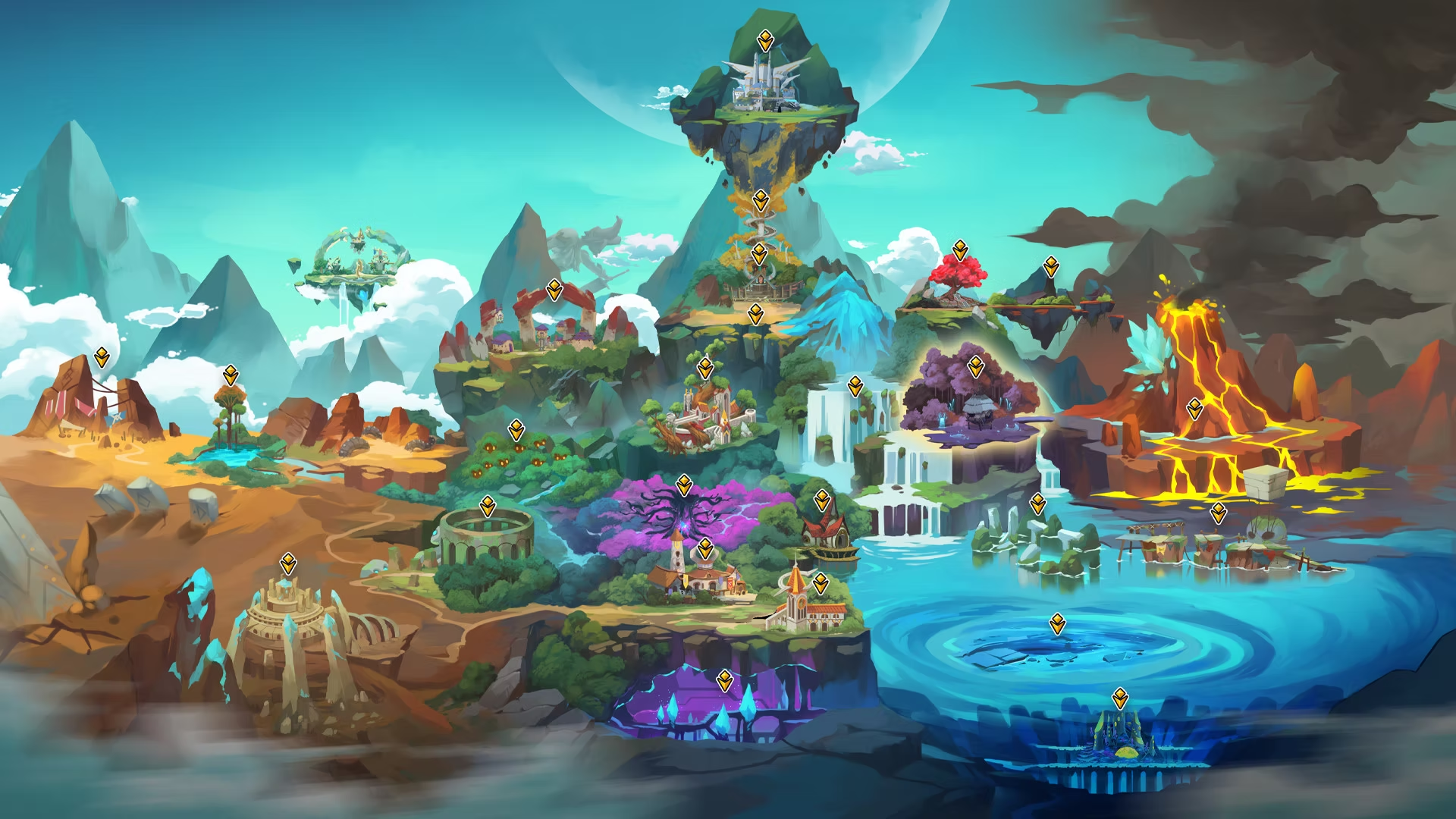
All the expected tropes of the genre are present and accounted for. The map is enormous, and the game features a central hub, rest spots, and fast travel locations. Best of all, you can pin areas on the map to remind yourself where you need to return once you have the right gear. It completely solves my common problem of forgetfulness.
Graphics and Sound
I do not have a single negative thing to say about the presentation in Fallen Tear: The Ascension. The graphics are incredible, utilizing a 3D-rendered style similar to The Lost Crown, but with a distinct historical Asian influence. While the color palette is incredibly diverse overall, it leans heavily into rich reds and earthy browns that make the world of Raoah feel grounded in its own unique history. The artistry is consistently beautiful, from the lush, layered backgrounds to the fluid animations that make Hira’s movements feel like a natural part of the environment.
The soundscape is equally impressive, shifting seamlessly between two distinct moods. While you are exploring ruined temples or quiet forests, the music is atmospheric and lo-fi, perfectly capturing the sense of mystery and isolation. However, the moment a boss appears or the action picks up, it swells into an epic score that raises the stakes. This transition keeps the world feeling alive and reactive to your progress, making the long stretches of exploration feel just as rewarding as the high-octane combat.
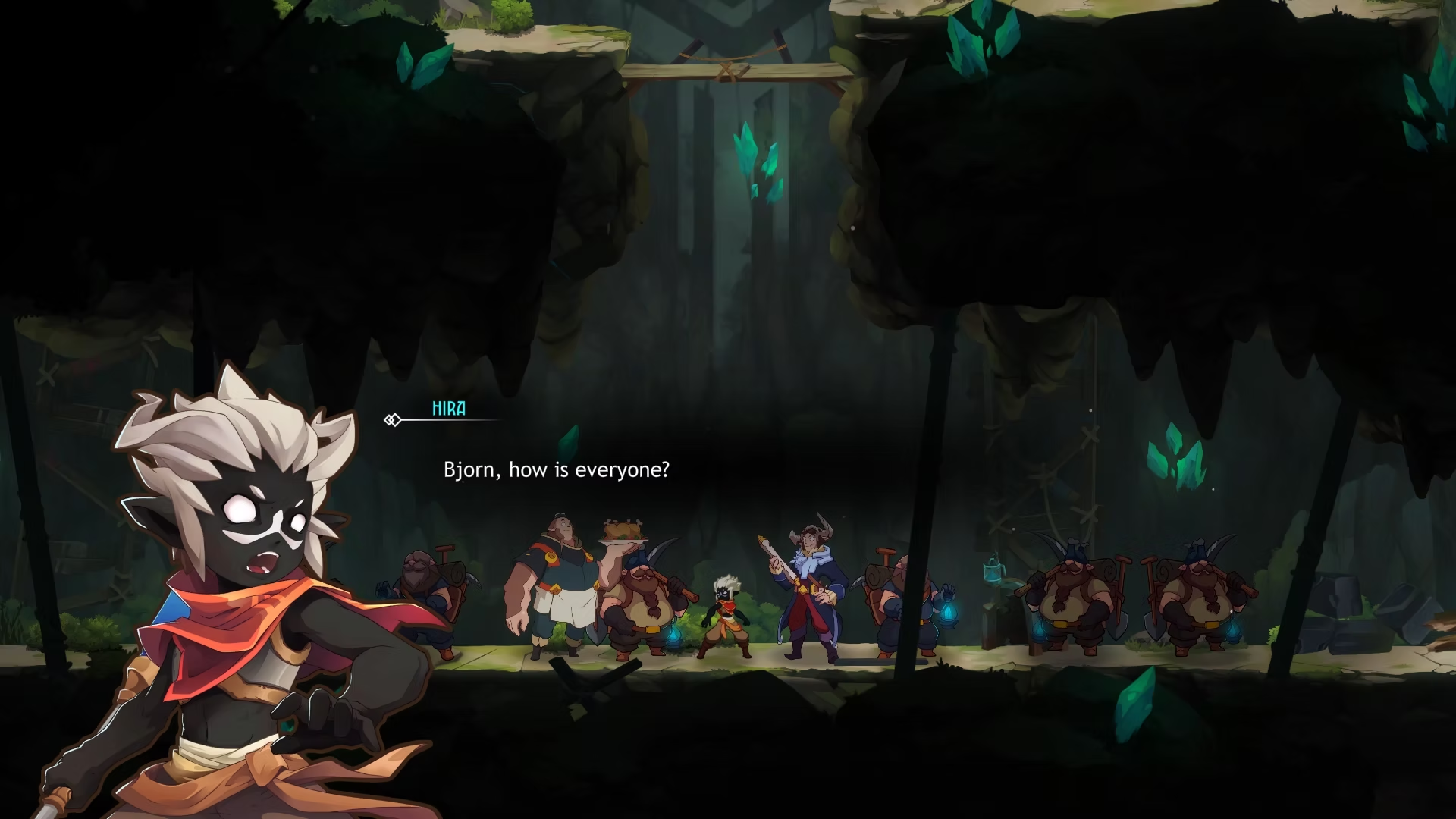
The voice acting adds a significant layer of immersion I didn’t expect. Each character has a distinct voice and personality, like one specific companion who ends every sentence with a playful “Rin.” These small details make the Fated Bonds feel like actual people rather than just mechanical upgrades. Even the sound effects contribute to the game’s precision; the “clink” of a sword and the “whoosh” of a successful dash provide the tactile feedback that makes the controls feel so responsive. The production value here is so high that I found myself completely glued to the screen. I did not want to stop playing, not even to jump into Resident Evil: Requiem.
Final Thoughts
I am only playing an early portion of the game right now, but the quality is undeniable. Once the full version is released and I can see this journey through to the end, I can almost guarantee that Fallen Tear: The Ascension will springboard to the near top, if not the very top, of my 2026 GOTY rankings.
To hear me talk more about Fallen Tear: The Ascension, be sure to listen to the March 17th, 2025 episode of The Gaming Outsider Podcast around the 51:59 time stamp.
This review is based an Early Access copy of Fallen Tear: The Ascension provided by Stride PR for coverage purposes. It is also planned for all current console releases in the future.