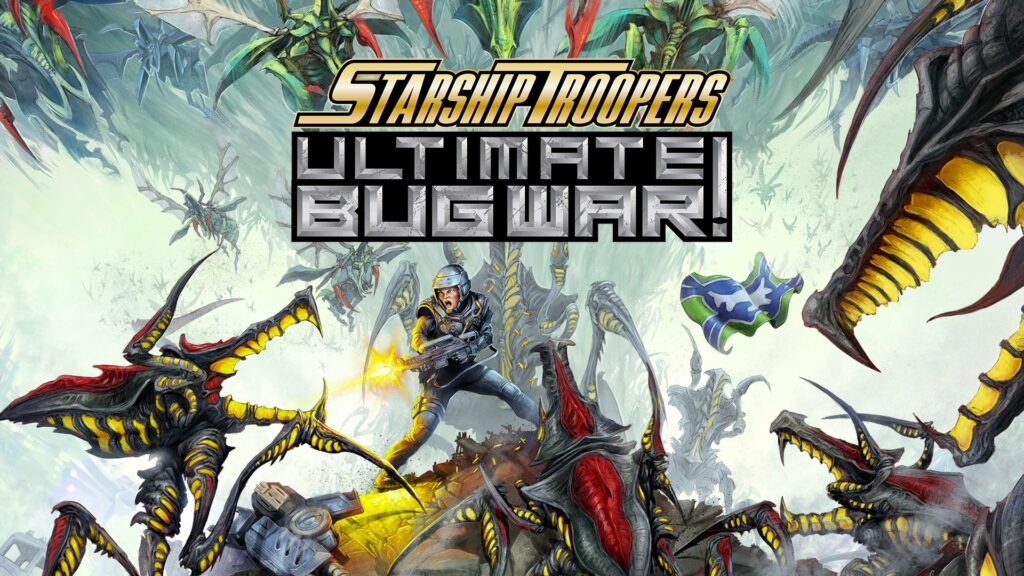
Starship Troopers: Ultimate Bug War | PS5 Review
Eighteen months ago, I checked out and reviewed Starship Troopers: Extermination, a multiplayer-focused PvE shooter from Offworld Industries. It was chaotic, cooperative and satisfying when a squad of real players worked together to hold the line against overwhelming Arachnid swarms. But as much fun as it was, it felt incomplete. The lack of any meaningful single-player component left a huge gap, especially for those looking for a more self-contained experience. To its credit, it has seen a steady flow of updates and post-launch support. I’ve even covered a few of those updates from our news division. But every single time I do, there’s one lingering question I keep coming back to: “where’s the single-player?”
Technically it exists. But it’s nothing more than a glorified tutorial set in caves squashing bug nests. All this time later, still nothing. Which makes the arrival of Starship Troopers: Ultimate Bug War feel less like coincidence and more like a long-overdue answer. Developed by Auroch Digital, the team behind Warhammer 40,000: Boltgun, this standalone, single-player-focused shooter steps into the space that Extermination left behind. It’s not exactly the kind of solo experience I initially had in mind, but at this point, it’s hard to argue with the results. Where one game stalled out with a token offering, the other shows up ready to actually follow through. And after a year and a half of waiting, I’ll take it. And I’m sure glad I did!
 Casper Van Dien returns as General Johnny Rico
Would You Like To Know More?
Set twenty-five years after the events of the 1997 film, Starship Troopers: Ultimate Bug War wastes no time establishing its hook. You’re not just a soldier fighting on the front lines, you’re a civilian playing a Federation-approved simulation based on the exploits of Federation hero Samantha Dietz during the events of the First Bug War. The entire game is framed as an in-universe recruitment tool, designed to condition the next generation of citizens for the endless war against the Bugs. It’s a clever setup that IMMEDIATELY separates it from Extermination, trading emergent co-op chaos for something more curated and…more importantly, self-aware.
The framing isn’t just window dressing either. Between missions, the game leans hard into its propaganda machine, delivering over-the-top briefings and recruitment messaging. Casper van Dien reprises his role as Johnny Rico, who’s there to bark out the usual “ooh-rah” enthusiasm, while a steady stream of in-universe commercials pushes the satire further. It’s ridiculous, darkly funny, and it nails the same propaganda-soaked tone that director Paul Verhoeven brought to the original film. And it’s not that big of a stretch to see what it’s riffing on. Military shooters like Call of Duty have long faced criticism for functioning as soft recruitment tools, whether intentional or not. And then there’s the game America’s Army, which was quite literally commissioned by the U.S. Army as a recruitment and PR tool. Ultimate Bug War takes that idea and cranks it to eleven, turning subtext into text, then turning text into satire.
Somebody Humped the Bunk
Where Starship Troopers: Ultimate Bug War really starts to separate itself is in its moment-to-moment gameplay, and the first thing that stands out, is how it treats the battlefield as something larger than a single perspective. Missions unfold across large, sprawling areas packed with multiple objectives that can be tackled in any order, creating a constant sense of controlled chaos. Whether you’re clearing nests, securing positions, or just trying to survive the next wave, it’s less about following a linear path and more about managing pressure across an open combat space on your own terms.
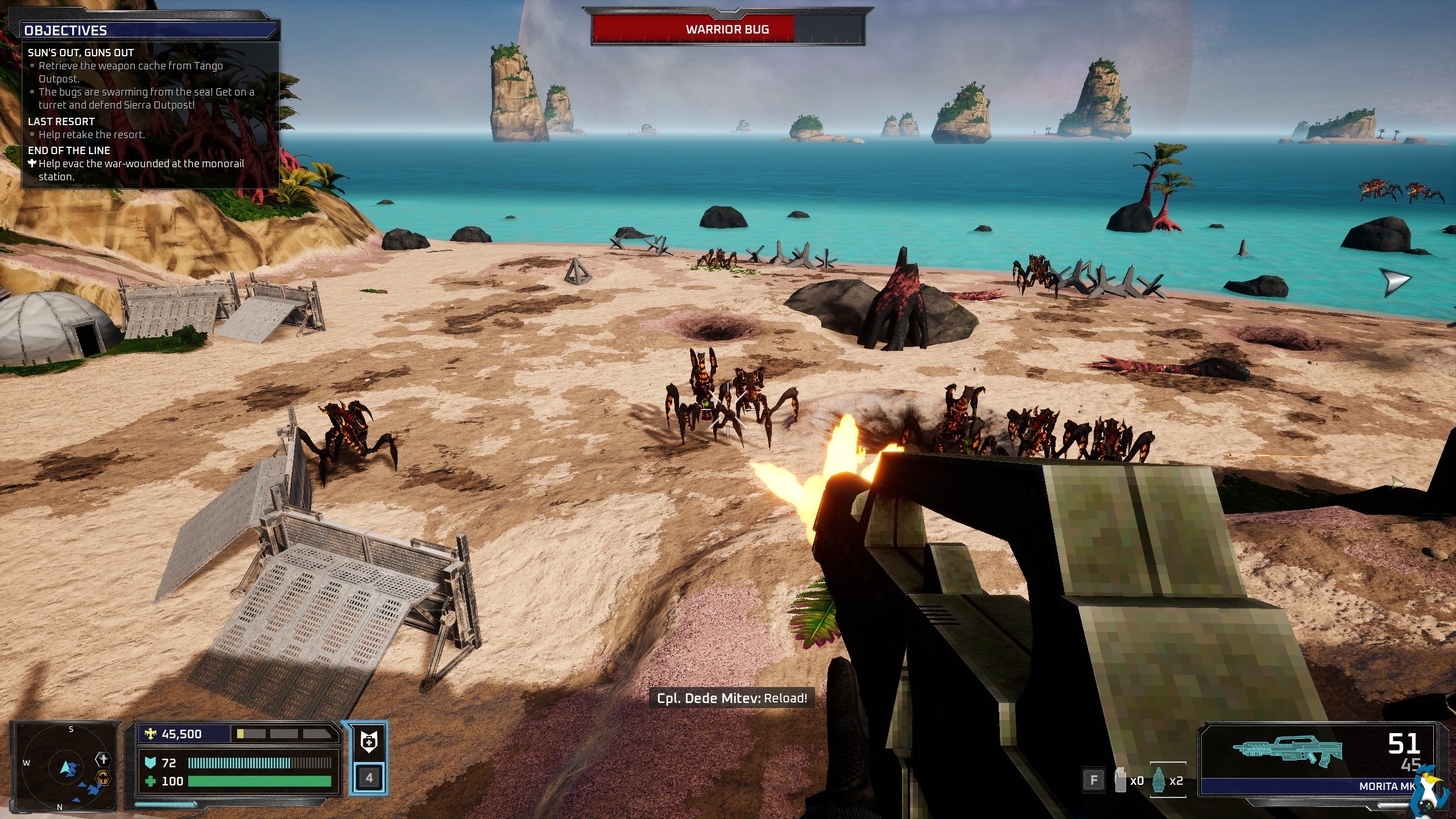
That structure extends into both combat and resource management. On the Federation side, you carry two primary weapons at once, each with an alternate fire mode, like the underslung shotgun on the Morita rifle, alongside a third limited-ammo specialty weapon that forces you to think carefully about when to deploy it. Ammo is governed by a full magazine reload system, meaning early reloads waste remaining rounds, turning even basic survival habits into small tactical decisions. When things get tight, supply crates scattered across the map and flare-called resupply drops keep the fight going without fully breaking momentum.
What helps tie all of this together is that the game occasionally flips perspective on the same conflict. Certain objectives trigger what I like to call “Last Stand Mode,” locking off a section of the map as Arachnid swarms close in while you hold the line. The distant bugs circling the battlefield are more atmospheric than interactive, but once the real waves hit, these segments become some of the most intense encounters in the game. It’s also worth noting that while Ultimate Bug War is sometimes described as a “boomer shooter,” it only partially fits that label. It carries an early 2000s PS2-era aesthetic and sensibility, but its structure is more modern, focused on large objectives and battlefield control rather than tight arena combat and constant circle-strafing.
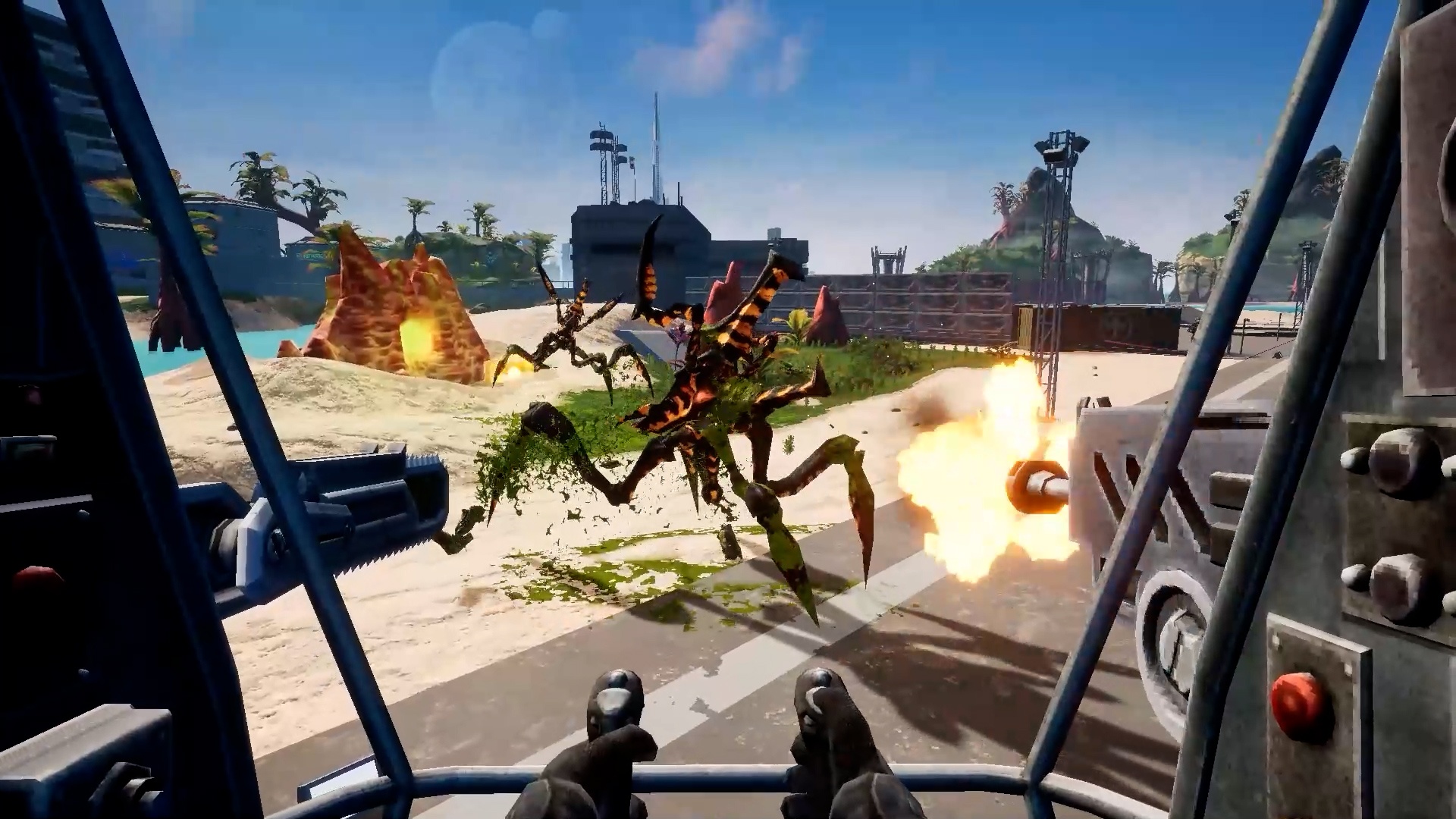
That same idea of shifting perspective carries over into the game’s Arachnid gameplay as well. At certain points, you can take control of the new Assassin Bug type, switching between different movement and attack modes in an attempt to mirror the chaos from the other side of the battlefield. On paper, it’s a great concept, offering a chance to experience the war from both ends of the conflict. In practice, however, it doesn’t feel nearly as refined. The flying in particular is imprecise, with dive attacks often overshooting targets, making what should feel like a power fantasy come across as awkward and inconsistent instead.
War! What Is It Good For? …Absolutely Everything!
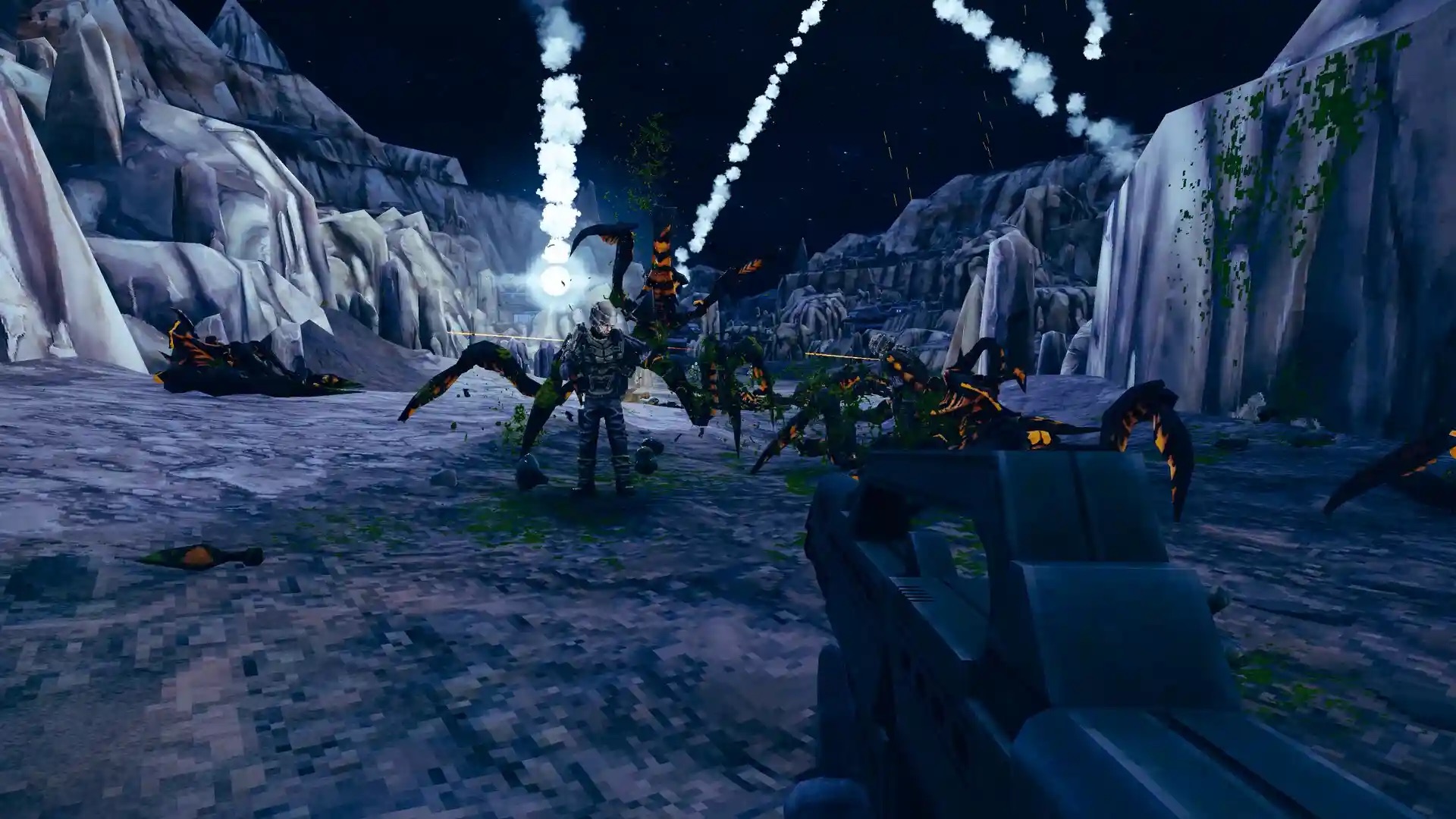
On a visual level, Starship Troopers: Ultimate Bug War fully commits to its retro-inspired presentation, clearly echoing the aesthetic approach of Warhammer 40,000: Boltgun. The game leans into a deliberately stylized mix of 3D and sprite work: Arachnids, environments, and weapon models are rendered in full 3D, while human squadmates appear as flat 2D sprites. The result is a constant visual contrast that reinforces the idea of a “simulation” rather than a literal battlefield.
That framing is pushed even further by the game’s own tongue-in-cheek claim that it represents the “most realistic simulated depiction of combat ever created,” a statement that becomes funnier the longer you look at it. The textures themselves lean into a late PS1 to early PS2-era aesthetic, not as a limitation but as an intentional choice, selling the idea that this is an in-universe training tool rather than a cutting-edge military sim. In a strange way, it works. Having that late-90s/early 2000s style makes the game feel like a lost tie-in game to the Starship Troopers film that never happened, but absolutely should have.
That aesthetic pairs naturally with the game’s propaganda-heavy presentation. Much like the original film, everything is filtered through a layer of manufactured enthusiasm and controlled messaging. Recruitment imagery, briefing screens, and mid-break propaganda all reinforce the Federation’s worldview, constantly selling the idea that this is both noble and necessary.
Audio and performance complete the package. While the game doesn’t use the original film score, it replaces it with a similarly heroic, militaristic soundtrack that captures the tone effectively. The game is also fully voice acted, with returning live-action cast members, including Casper Van Dien, who absolutely hams it up in all the right ways. Nobody plays it straight, and that exaggerated delivery actually strengthens the satire rather than undermining it. The whole presentation, from visuals to audio, feels unified in its absurdity, like a Federation-produced artifact that somehow escaped into reality.
Fleet Does The Flying; M.I. Does the Dying
At the end of the day, Starship Troopers: Ultimate Bug War isn’t the single-player experience I originally imagined when I first wrote about Extermination. It doesn’t come from the same place and it doesn’t try to solve the same problem. But honestly? It works. Not perfectly and not without some friction, but it works in a way that’s very aligned with the tone of the franchise it’s adapting. Because Extermination was laser focused on moment-to-moment multiplayer action, it had little room to lean into any real narrative framing as a core pillar. By contrast, Ultimate Bug War builds itself around exactly that and runs with it fully confident and committed. The end result is a game that embraces the satire and world building, rather than treating it as background dressing.
Between its self-aware presentation and its commitment to turning war into entertainment, it understands the assignment more often than it misses. And even when the game stumbles, like the Bug missions or the uneven pacing, it never loses sight of what it’s trying to be. After waiting this long for a proper solo-focused Starship Troopers game, I came in with expectations that were probably too specific. What I got was something different, but still genuinely engaging in its own right. At this point I’ll take it, and that is perhaps the most Federation-approved conclusion of all, because remember: Service Guarantees Citizenship!
To hear me talk more about Starship Troopers: Ultimate Bug War be sure to listen to the April 14th, 2026 episode of The Gaming Outsider Podcast around the 48:05 timestamp.
This review is based on a purchased copy of Starship Troopers: Ultimate Bug War. It is also available on Xbox Series X|S, Nintendo Switch 2, and PC
Starship Troopers: Ultimate Bug War
$24.99
Pros
- Fully embraces the franchise’s tone
- Tight, flexible moment-to-moment gameplay
- Great audio/visual presentation
- Casper Van Dien is back as Johnny Rico
Cons
- Relatively short experience
- Some pacing issues and barron environments between objectives
- Bug Mode is awkward and imprecise