
The Coin Game | PS5 Review
I went into The Coin Game with a pretty specific expectation. I had just come off spending a ridiculous amount of time with Arcade Paradise, a game I enjoyed enough that I played through it twice. At first glance this looked like a similar idea taken in a slightly different direction. Run an arcade, play arcade games, build up a small economy around doing chores while sneaking off to play more and so on. On paper, it almost looked like someone had taken that formula and simply swapped video arcade cabinets to skill and luck based redemption games.
I was wrong. Very quickly, The Coin Game, developed and published by solo developer “devotid”, reveals itself to be something far more unusual, and a lot harder to neatly categorize. What starts as a familiar loop of playing mini-games and earning currency slowly expands into something looser, stranger, and more systemic than I expected. Instead of curated arcade management fantasy, it feels more like being dropped into an open-ended, slightly off-kilter and janky economy where everything is a machine designed to extract coins and time from you. In lots of ways, this is the ultimate time waster game.
Redemption Song
Unlike Arcade Paradise, which confines its entire experience to a single evolving business location, The Coin Game immediately makes it clear that you are not operating in one controlled space. There is no real fixed “hub” to speak of that gradually transforms around you. Instead you are dropped into a much larger, open-ended environment that spans multiple locations, each with arcades, shops, dining, attractions and systems that all feed into the same underlying economy.
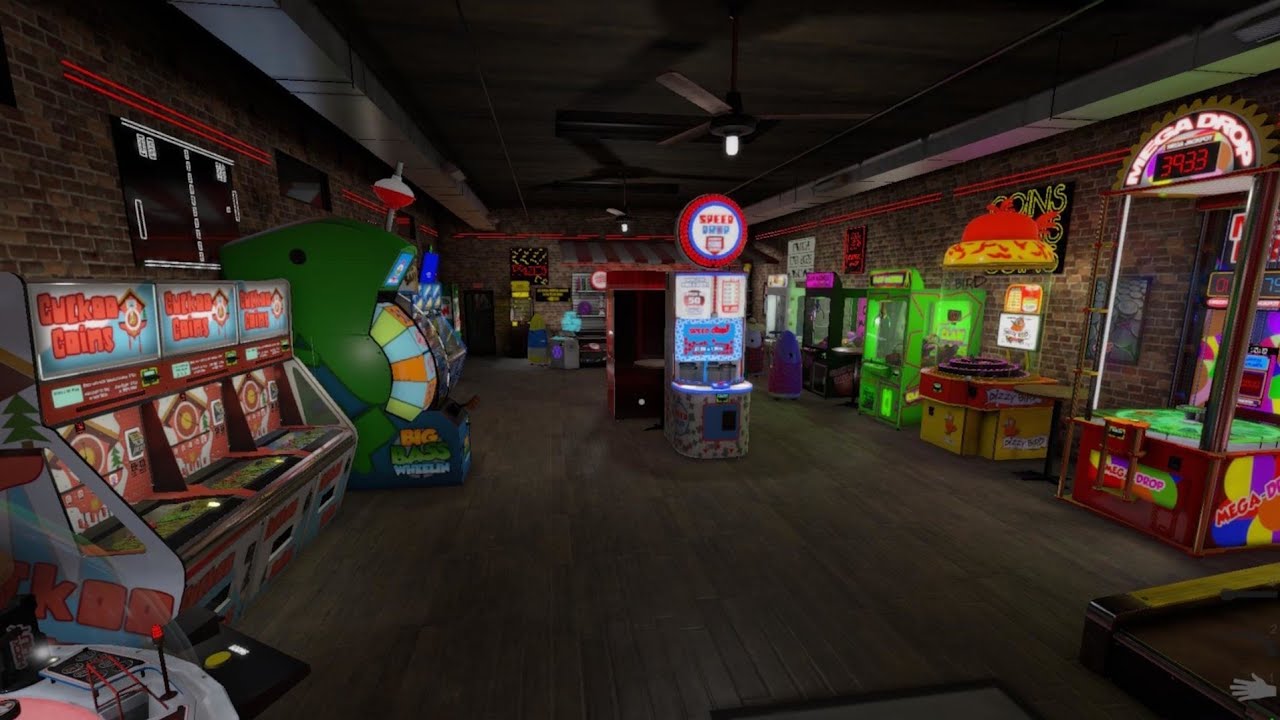
At its core, there isn’t a traditional narrative structure in the conventional sense. No real overarching story to follow, no campaign beats that guide you from A to B. What exists instead is a loose framework built around survival, progression, and movement between different parts of this world. You are essentially a drifting participant in a strange coastal ecosystem of arcade machines, ticket counters, convenience stores, in a world populated by robots…more on that later.
The scale is what defines it. Unlike Arcade Paradise’s single space, The Coin Game is about navigating an entire network of spaces that feel loosely connected but always active. You’re not expanding a business, you’re surviving inside a system that already exists without you, and deciding how long you stay afloat within it.
Tickets, Please
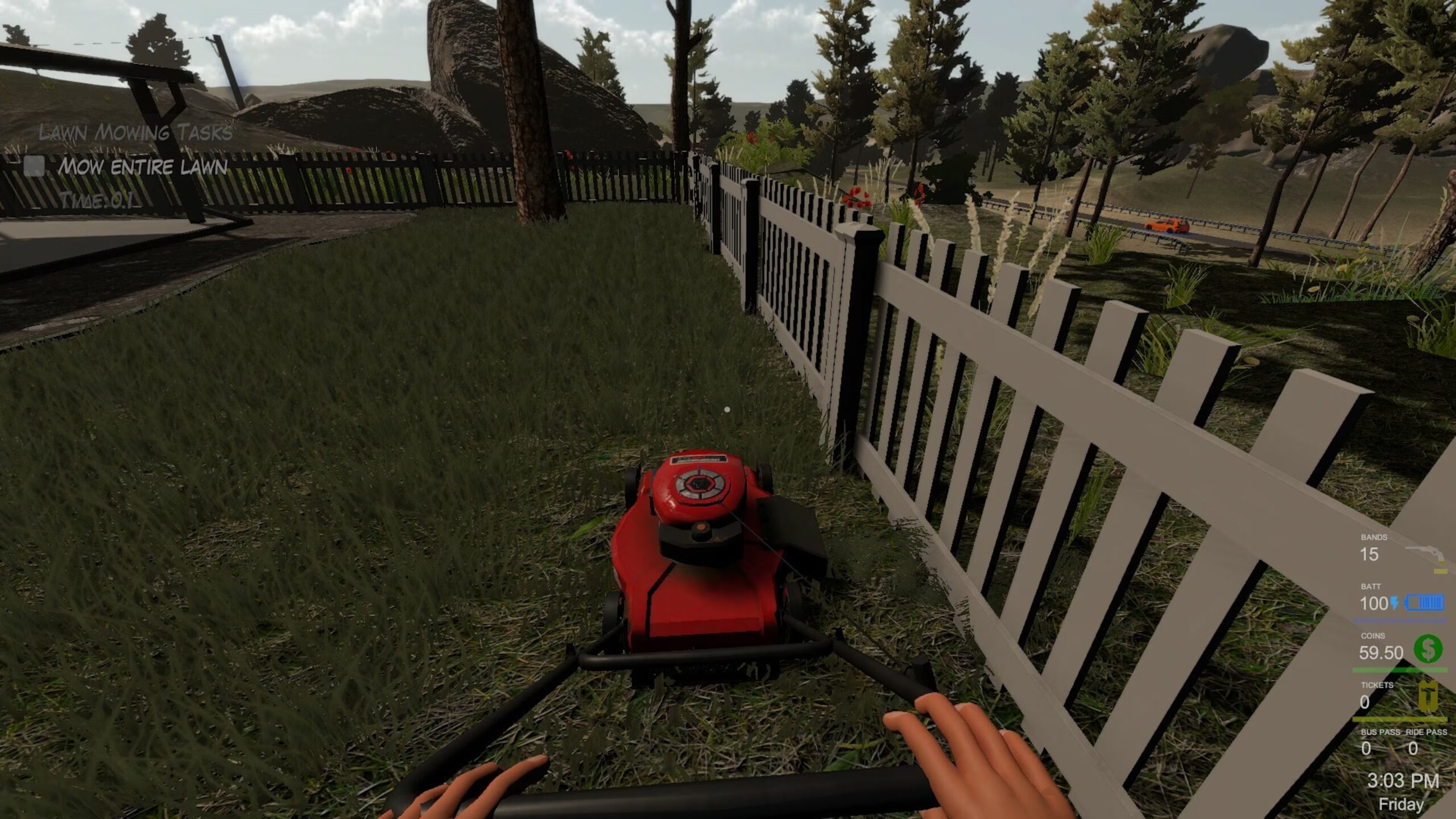
Where The Coin Game really comes into focus is in its core gameplay loop and how its different modes shape that experience. At a glance, it’s easy to assume this is just a collection of arcade-style mini-games, but everything feeds into a broader cycle of earning money, spending it on machines, converting that into tickets, and using those winnings to keep yourself going. In Survival mode, which acts as the game’s central pillar, that loop becomes the entire experience. You’re constantly juggling money, time, and basic needs, bouncing between arcades and attractions in an ongoing effort to sustain yourself while chasing bigger payouts.
Other modes shift that structure without completely abandoning it. Birthday mode essentially acts as a freeplay variant, built around the premise that a wealthy uncle is bankrolling your entire outing. With unlimited funds and no need to worry about sleep, energy, or survival mechanics, it removes the pressure and lets you engage with the machines and the world purely on your own terms. It’s a more relaxed way to explore what the game has to offer, though it also strips away some of the tension that makes the main loop compelling in the first place.
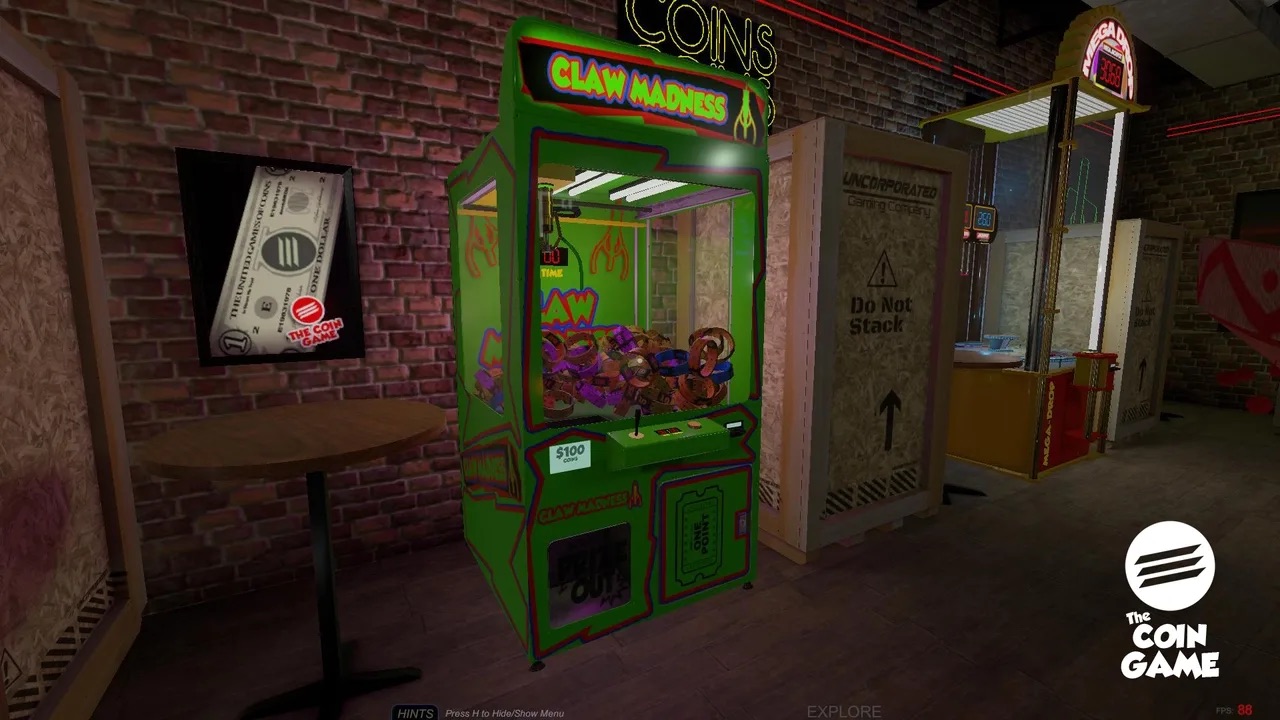
Then there’s Quick Play, which takes things in the opposite direction by isolating individual machines entirely. Instead of moving through the world, you select a game and it’s dropped into a blank, almost holodeck-like space for immediate access. It’s functional, but also highlights just how much of The Coin Game’s identity comes from its broader context. The machines themselves are only part of the appeal. It’s the act of existing within that larger system, moving between spaces and managing your resources, that gives the experience its staying power.
All The Charm of the Glitchy Arcade Cabinet
Visually, The Coin Game exists in a strange space between deliberate roughness and genuine technical limitation. On one hand, there’s a clear sense that some of its jank is intentional, leaning into that same kind of absurd, slightly broken charm you’d find in Goat Simulator. Animations can feel loose, interactions aren’t always perfectly polished, and the overall presentation carries that low-budget, off-kilter energy that gives the game a personality of its own. In that sense, a lot of the rough edges feel like part of the appeal rather than something working against it.
That said, not everything can be written off as stylistic choice. There are moments where the presentation crosses over into outright technical issues, the most noticeable being persistent screen tearing even during minor camera movement. Unlike the intentional jank, which adds to the game’s charm, this kind of instability actively detracts from the experience and becomes difficult to ignore over longer sessions. It’s one of the few areas where the game’s roughness feels unintentional, and it stands out because so much of the rest feels deliberately constructed.
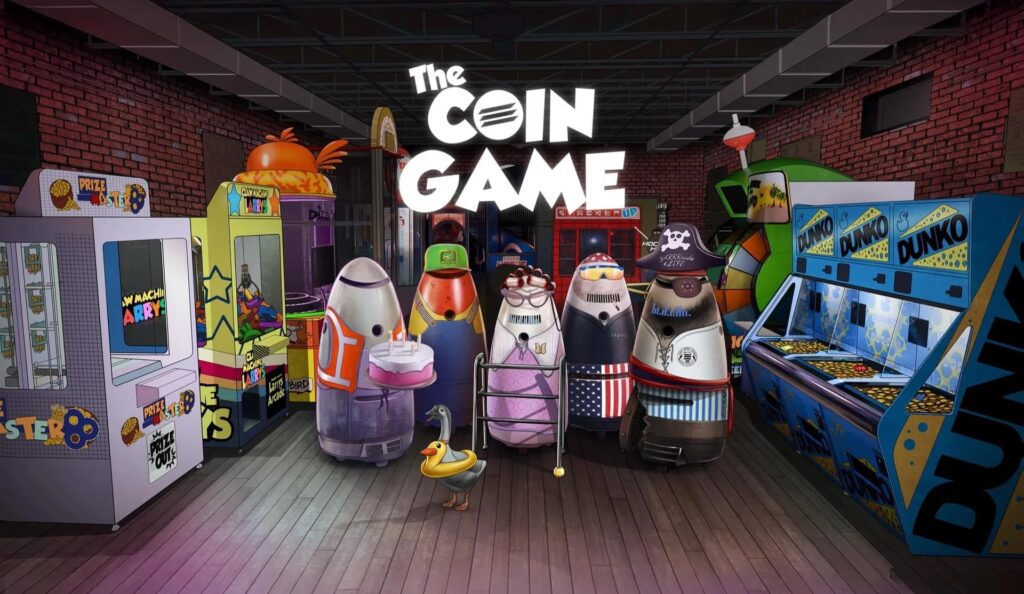
The visual design itself leans heavily into that same offbeat charm, especially when it comes to its NPCs. Everyone you encounter is represented as a utilitarian robot, resembling roving mall security or corporate service units, yet they’re dressed and styled like everyday people. The result is oddly endearing. Seeing these expressionless machines casually going about human activities, whether it’s hanging out in arcades or participating in local events, adds a layer of humor that feels completely in line with the game’s tone. It’s a bizarre choice on paper, but in practice it works, giving the world a distinct identity that’s equal parts uncanny and charming.
Insert Coin
At the end of the day, The Coin Game is one of those experiences that’s far easier to appreciate than it is to neatly define. What started as something I assumed would be a smaller-scale take on Arcade Paradise quickly revealed itself to be something much broader, and frankly, much stranger. It’s not just about playing arcade games or chasing tickets. It’s about existing inside a system that constantly nudges you to keep going, one more game, one more payout, one more attempt to come out ahead.
That loop is where the game lives or dies, and for the most part, it works. There’s something undeniably compelling about bouncing between locations, sampling different machines, and slowly building up enough momentum to sustain yourself. Even when the mechanics are a little rough or the experience leans into its own jank, there’s a rhythm to it that’s hard to walk away from. It’s not always smooth, and it’s not always fair, but it feels authentic in a way that mirrors the unpredictability of real-world arcades.
That said, it’s not without its issues. The technical side can get in its own way at times, particularly with noticeable screen tearing that breaks immersion more than the intentional rough edges ever do. Some of the mini-games can feel inconsistent, and depending on how you approach it, the loop can drift from engaging to repetitive. But even with those drawbacks, there’s a distinct personality here that’s hard to ignore.
It’s weird, it’s a little janky, and it absolutely won’t be for everyone. But if you’re willing to meet it on its own terms, The Coin Game offers a strangely compelling sandbox that sticks with you longer than you might expect. It’s not just a game about playing machines, it’s a game about getting caught in the loop of them. And somehow, that ends up being the most fitting experience it could possibly deliver.
To hear me talk more about The Coin Game be sure to listen to the March 26th, 2026 episode of The Gaming Outsider Podcast around the 1:00:42 timestamp.
This review is based on a PlayStation 5 version of The Coin Game provided by Kwalee Games for coverage purposes. It is also available for Xbox Series X|S and PC via Steam.
The Coin Game
$19.99
Pros
- Addictive Arcade Loop with surprising depth
- Unique open-ended structure
- Charming, off beat presentation
Cons
- Noticeable screen tearing and technical issues
- Inconsistent quality amongst games
- Loop can get repetitive