Bounty Hunters, Mercenaries, and Pilots: Why Star Wars Games Work Best Outside the Spotlight
There is an obvious fantasy at the heart of Star Wars video games.
You pick up a lightsaber. You hear that familiar snap-hiss. Someone says something serious about destiny. Five minutes later, stormtroopers are flying into walls, doors are opening through space magic, and the galaxy is once again depending on one person with excellent reflexes and questionable emotional support.
And look, that works.
Lightsabers are cool. Jedi are cool. Force powers are cool. Nobody is here to pretend otherwise. If a game hands you a controller and asks whether you want to deflect blaster bolts back into a stormtrooper’s face, the answer is usually yes.
But after decades of Star Wars games, something else has become just as clear. The galaxy is often more interesting when the player is not standing directly in the middle of the prophecy machine.
Sometimes Star Wars games work best when you are not the chosen one. Sometimes they work best when you are a bounty hunter with a jetpack, a mercenary with a blaster, a clone commando following orders, a pilot locked inside a cockpit, or a scoundrel trying very hard not to get vaporized.
That is where Star Wars games have always had an advantage over the movies.
They do not have to show us the most important person in the room.
They can let us be someone who simply has a job to do.
Hokey Religions and Ancient Weapons
The Jedi fantasy is powerful, but it is also heavy.
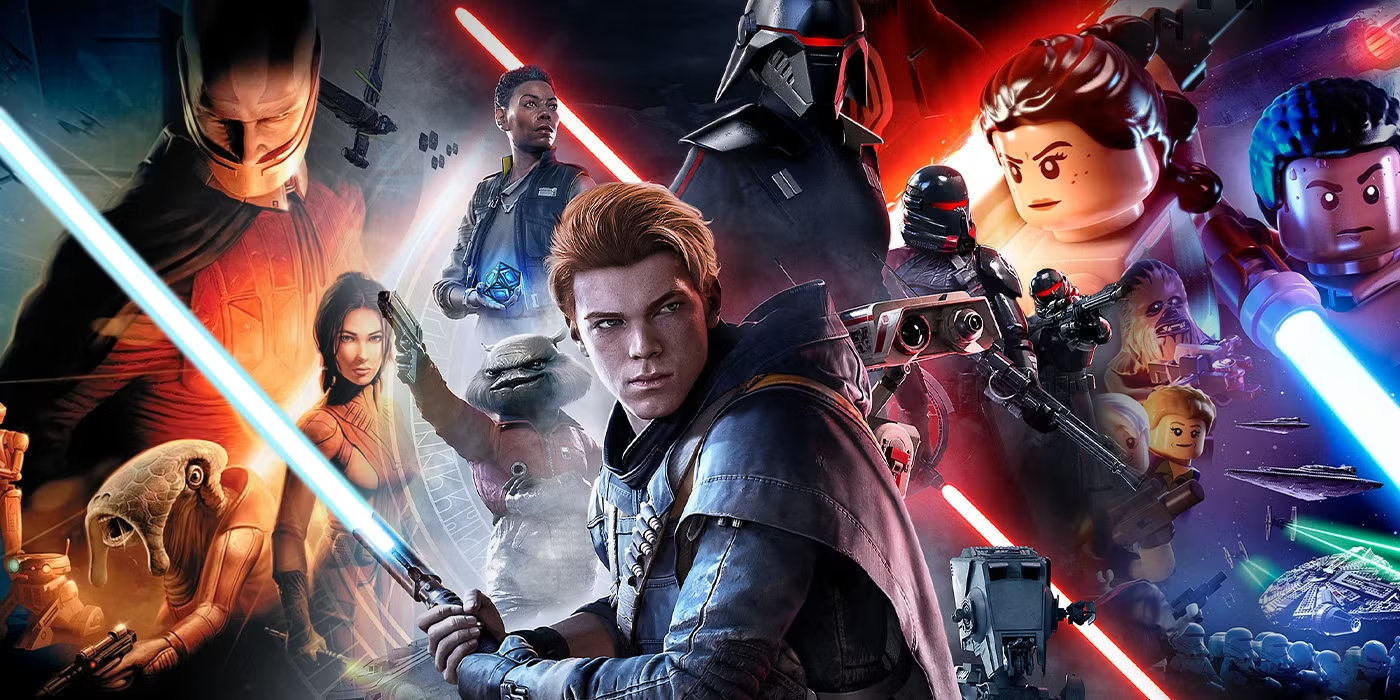
The moment a Star Wars game puts a lightsaber in your hand, expectations change. The story usually becomes bigger. The stakes get louder. The player is no longer just moving through the galaxy. They are probably going to reshape it, redeem someone, uncover a secret order, or duel a black-cloaked problem with a dramatic health bar.
That can absolutely work. The Jedi Knight series, The Force Unleashed, and the modern Jedi games have all found different ways to make that fantasy exciting. Even something as wonderfully chaotic as Star Wars: Episode I: Jedi Power Battles has charm because it understands the simple arcade joy of grabbing a Jedi, swinging a lightsaber, and turning The Phantom Menace into a couch co-op brawl.
Sometimes that is enough. Sometimes you just want to be Plo Koon before the movies remembered to let Plo Koon do anything.
But Star Wars games gain texture when they step away from that obvious power fantasy.
Because the galaxy is not only made of Jedi Temples, Sith tombs, secret bloodlines, and dramatic conversations about balance. It is also made of smugglers, pilots, scouts, commandos, technicians, gangsters, spies, droids, soldiers, informants, cantina weirdos, and whatever category Watto belongs to.
Tax problem with wings, maybe.
The movies can suggest that larger world. Games can actually let us live in it.
You Can Run
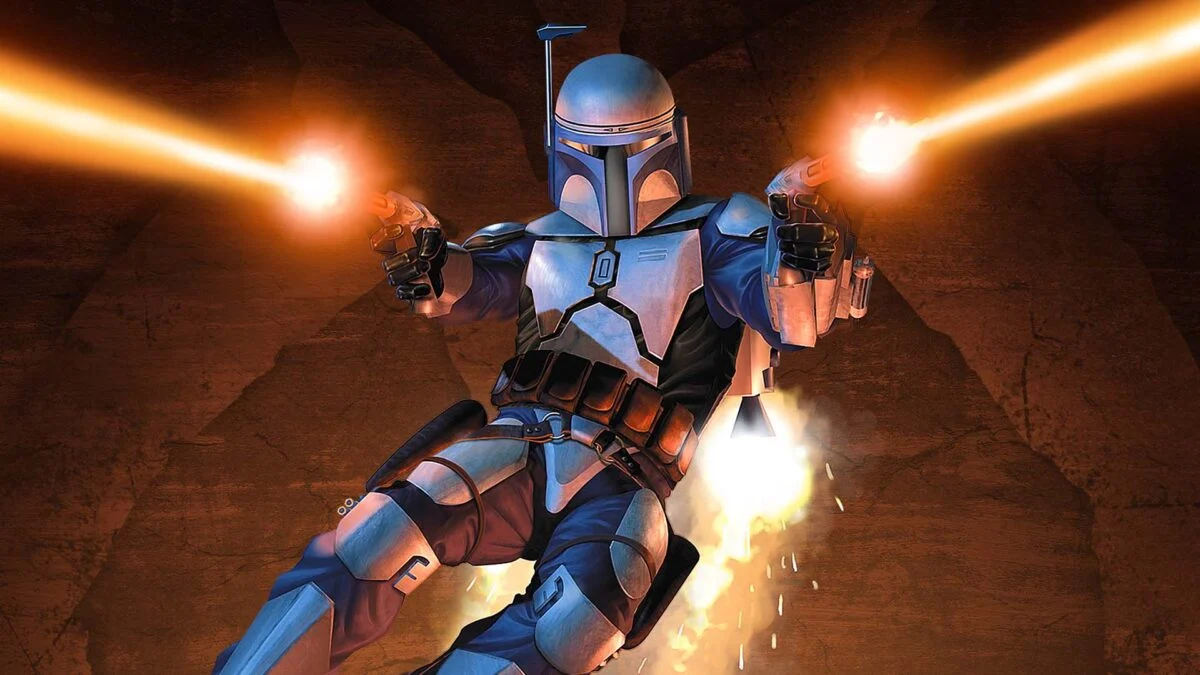
That is why Star Wars: Bounty Hunter remains so interesting, even with all of its early-2000s rough edges still firmly attached.
It is not secretly one of the smoothest action games of its era. It is not a hidden masterpiece where every mechanic has aged gracefully. Even the actual bounty hunting, the thing printed right there in the title, is arguably one of the weaker parts of the experience. That is almost impressively cruel.
But the game understands the role.
You are Jango Fett. You have twin blasters, a jetpack, a flamethrower, missiles, poison darts, and the general warmth of a man who will one day become the genetic template for an army.
The appeal is not that every system is perfect. The appeal is that the game lets you step into a very specific corner of Star Wars and stay there.
You are not saving the galaxy.
You are working.
That matters.
Bounty Hunter is strongest when it remembers that Star Wars does not always need to be about destiny. Sometimes it can be about contracts, underworld politics, bad employers, worse targets, and flying over enemies with a jetpack because walking is for people with less interesting armor.
It also taps into something the prequel era did better than it often gets credit for: making the galaxy feel busy. The films gave us Jedi councils, clone armies, trade disputes, and Senate speeches. The games and tie-ins gave us the grimier stuff underneath.
Criminal syndicates. Arena fights. Mercenary work. Backroom deals.
That is a very playable version of Star Wars.
You’re Not Authorized in This Area
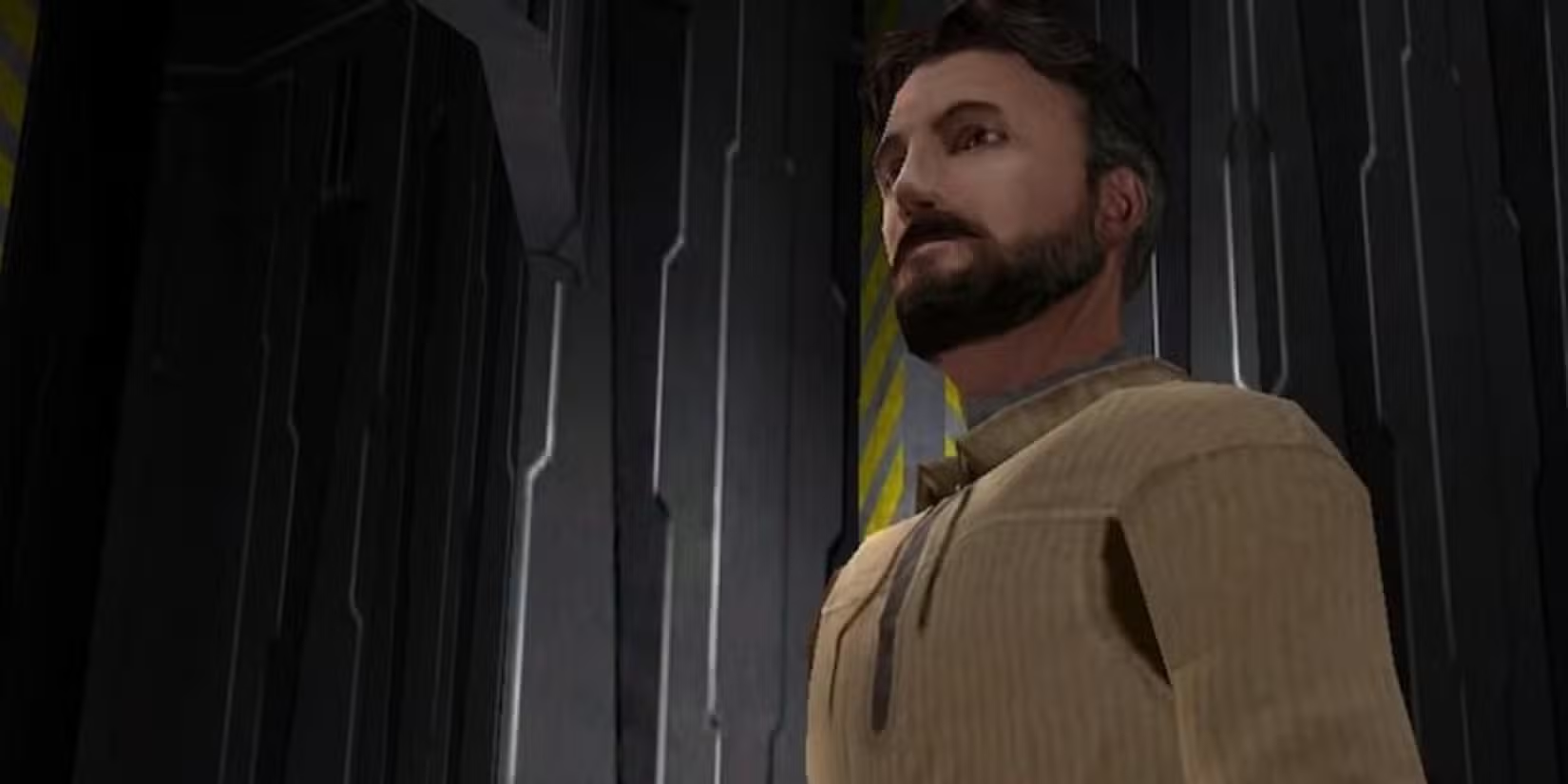
The same idea runs through Star Wars: Dark Forces Remaster, and honestly through the whole Kyle Katarn era.
Before Kyle became more deeply tangled in Jedi mythology, Dark Forces worked because he was a mercenary with a mission. He was not Luke Skywalker. He was not a chosen savior. He was a former Imperial officer working with the Rebellion, sneaking into Imperial facilities, blasting stormtroopers, stealing plans, and uncovering the Dark Trooper project one extremely maze-like level at a time.
And yes, those levels can be a lot.
Classic first-person shooters had real confidence in the player’s ability to remember seventeen identical corridors, three keycards, four switches, and one elevator that only works after you press a button hidden behind something that looks like wall texture. That was just gaming in the ‘90s. We survived because we had graph paper, stubbornness, and fewer responsibilities.
But Dark Forces made Star Wars feel playable in a way the films could not.
It took the Rebel mission fantasy and turned it into spaces you could explore. It gave Imperial bases a sense of scale, danger, and confusion. It made stormtroopers feel like enemies in a level, not just background casualties in a heroic montage. Most importantly, it created room for new Star Wars mythology that belonged to games first.
Kyle Katarn, Jan Ors, the Dark Troopers, the industrial guts of the Empire; this was not just Star Wars being adapted into a shooter.
It was Star Wars expanding through a shooter.
Just Like the Simulations
Then there are the pilots and soldiers.
If Jedi games are about power, Star Wars flight and battlefield games are often about placement. Where are you in the fight? What are you flying? What are you protecting? Which command post is about to fall because half your team decided to sprint toward the same doorway like lemmings in clone armor?
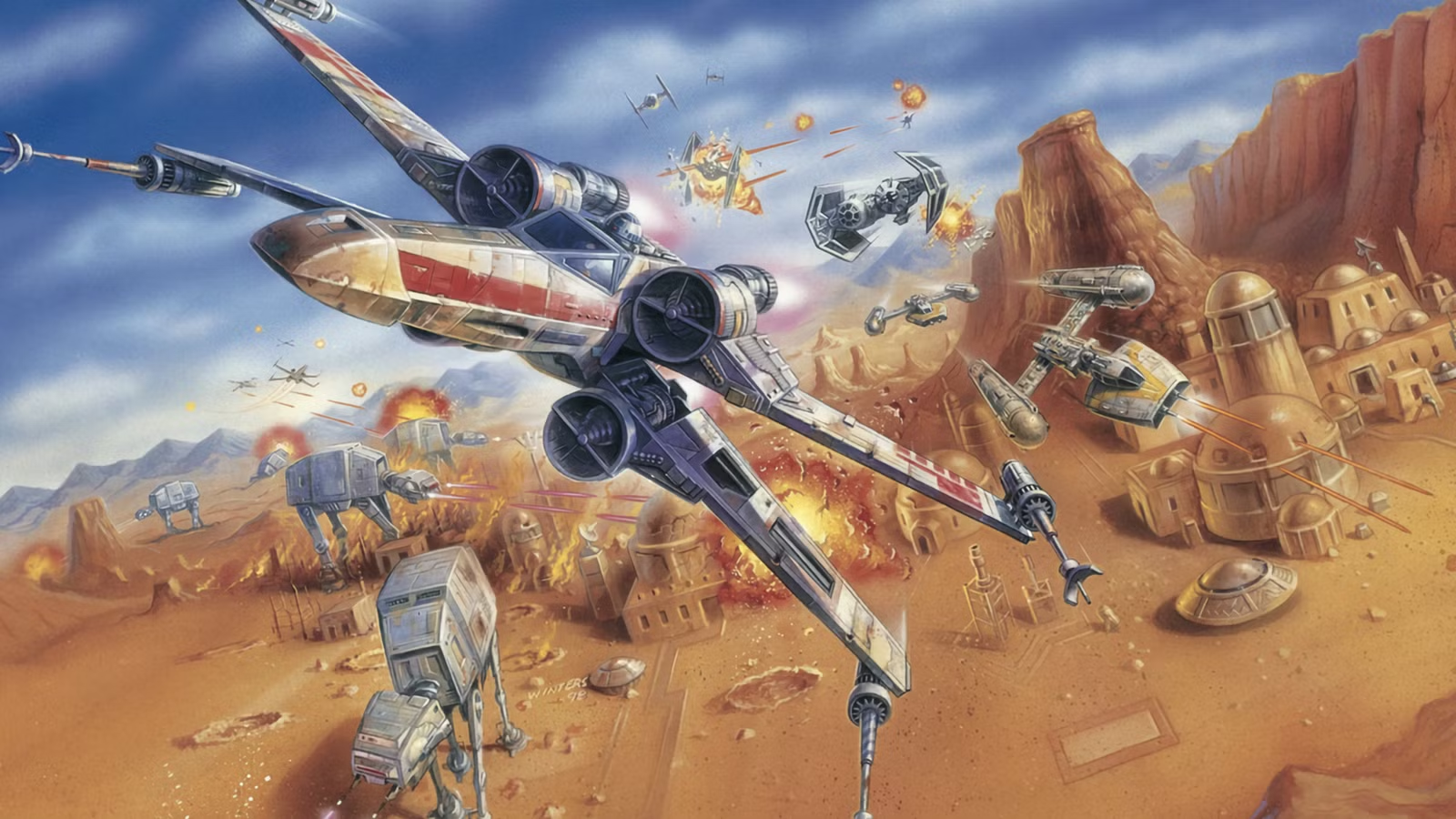
The old X-Wing and TIE Fighter games understood this beautifully. They made space combat feel tense, technical, and oddly professional. You were managing shields, targeting systems, protecting transports, inspecting cargo, and trying not to become a brief fireball against the stars.
TIE Fighter was especially bold because it let players inhabit the Imperial machine without turning the whole thing into a cartoon. You were a pilot. A cog, yes, but a skilled one. The fantasy was not moral clarity. It was competence.
Cold, efficient, deeply questionable competence.
Rogue Squadron made the fantasy more immediate. It was not a full simulator, but it nailed the feeling of being thrown into famous and not-so-famous battles with just enough chaos to keep the dream alive. You were not watching the Battle of Hoth. You were wrapping tow cables around AT-AT legs while everything exploded around you.
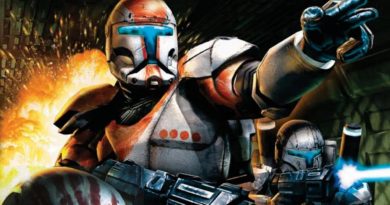
The Star Wars: Battlefront Classic Collection taps into the same idea. Battlefront’s great trick was never just that you could play as famous heroes. The real magic was being a regular soldier on a recognizable battlefield and still feeling like your tiny contribution mattered.
Capture the command post. Hold the line. Jump into a tank. Crash a speeder bike into something expensive.
That is Star Wars, too.
Maybe not the mythic version, but the playable one.
Never Tell Me the Odds
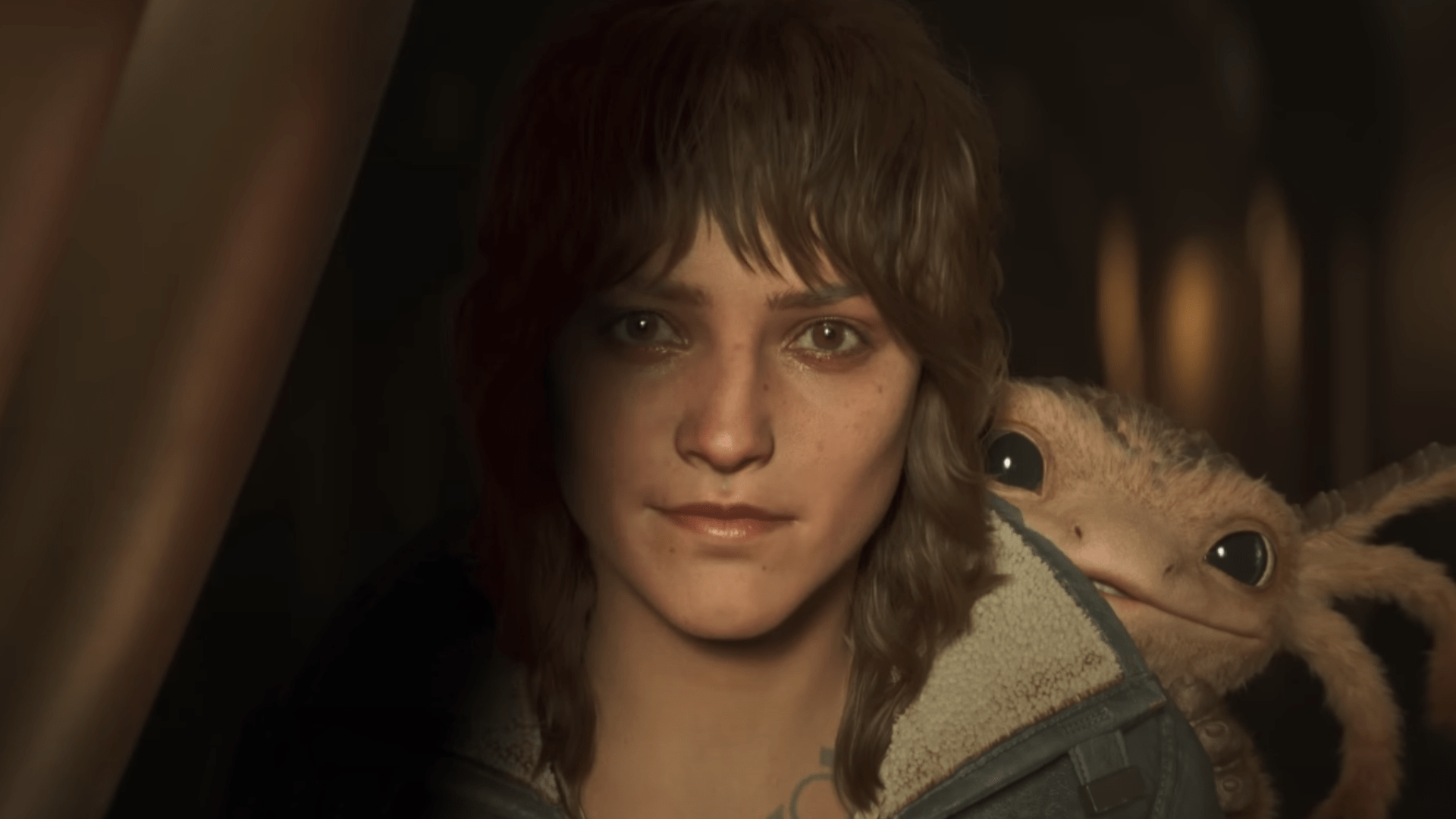
This is also why Star Wars Outlaws is such a useful modern example.
It was never going to please everyone, because no Star Wars game can. At this point, a Star Wars logo appears on something and half the internet immediately begins preparing courtroom arguments.
But Outlaws made one choice that still matters: it built its fantasy around someone who is not a Jedi.
Kay Vess is not here to restore balance to the Force. She is not secretly the most important person in galactic history. She is a thief trying to survive a criminal underworld full of syndicates, shifting loyalties, bad decisions, and people who seem extremely comfortable pointing blasters at each other indoors.
That is why the game’s best ideas work.
The reputation system, syndicate territories, underworld tone, reliance on Nix, and Kay’s constant need to bluff, sneak, shoot, and improvise all give the game an identity that is not built around glowing swords. As The Gaming Outsider’s Star Wars Outlaws review pointed out, the lack of lightsabers is not a weakness. It is part of what makes the game feel refreshing.
That does not mean Outlaws is perfect.
It has Ubisoft bones. You can see the open-world structure under the Star Wars paint. There are stealth systems, map activities, upgrades, faction meters, and all the usual modern machinery humming away in the background.
But when the fantasy clicks, it clicks because you are inhabiting a role Star Wars games have not explored nearly enough.
A scoundrel story should feel different from a Jedi story.
Outlaws understands that.
The RPG Galaxy
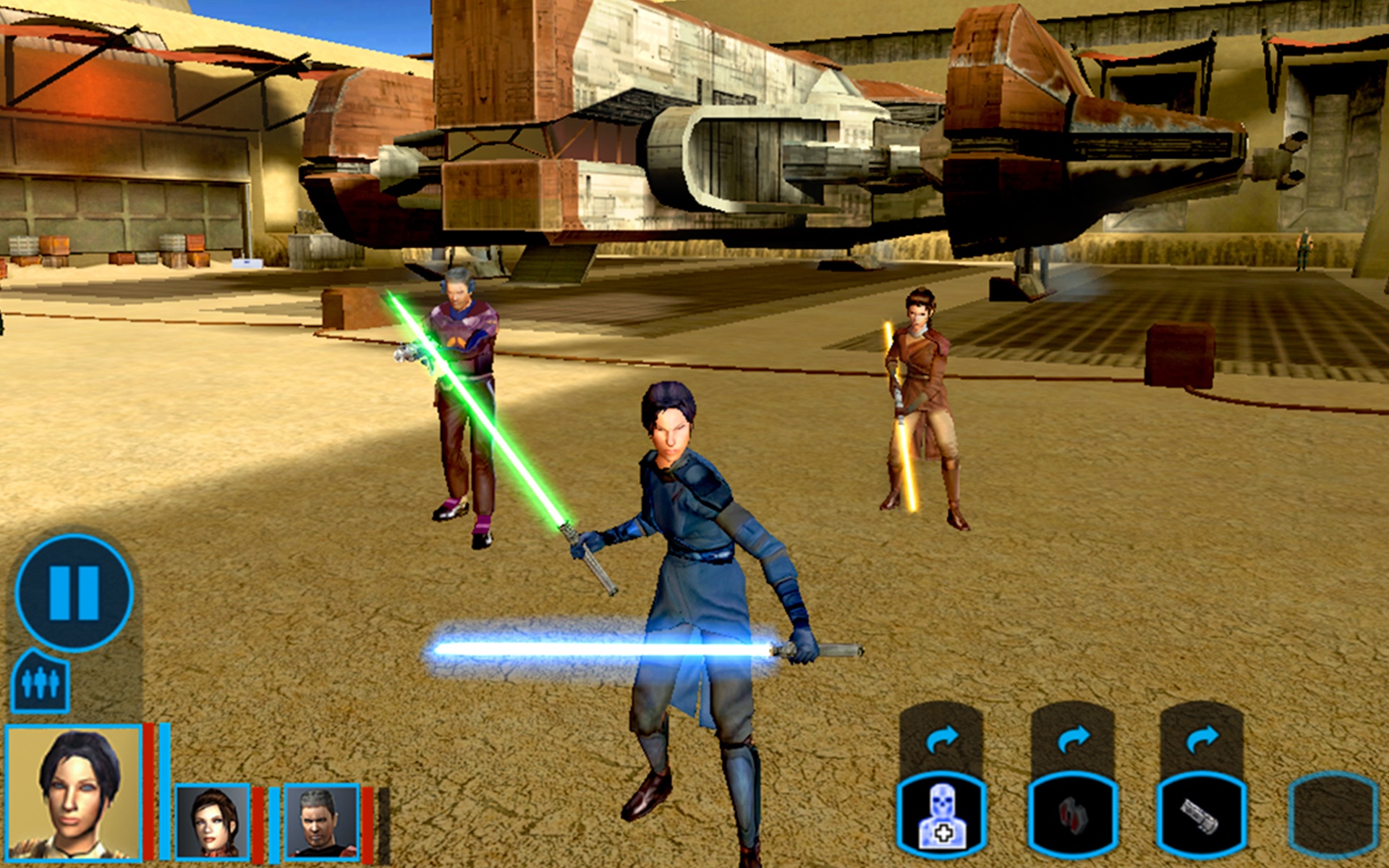
KOTOR and SWTOR complicate this a little, because they absolutely deal in Jedi, Sith, destiny, ancient powers, and dramatic robes.
So many robes.
But even there, the reason these games endure is not simply because they let players swing lightsabers. It is because they let players define who they are inside the galaxy.
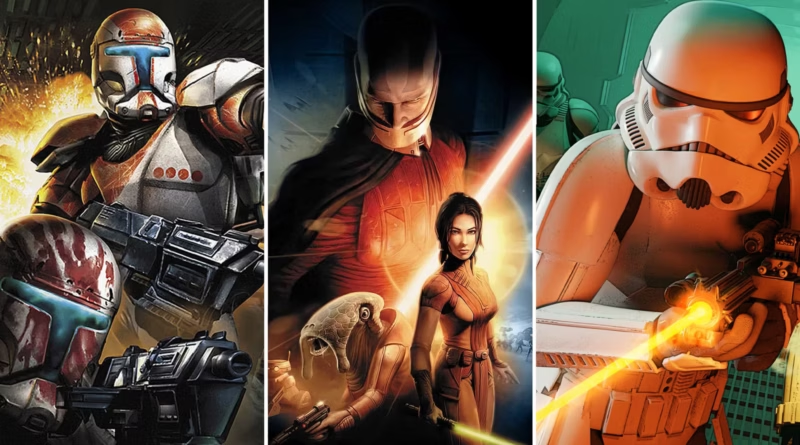
Knights of the Old Republic gave players a full role-playing structure at a time when many Star Wars games were still focused on action, flight, or direct adaptation. It offered companions, moral choices, planets to explore, and the sense that the galaxy had history far beyond the films.
SWTOR pushed that even further by splitting the galaxy into class stories. Yes, Jedi Knights and Sith Warriors are there for anyone who wants traditional Force-powered drama. But some of the game’s best material comes when it leans into other identities: Imperial Agent, Smuggler, Bounty Hunter, Trooper.
Jobs. Loyalties. Personal codes. Professional disasters.
That is where the Old Republic era becomes more than just “Star Wars, but older.”
It becomes a space where players can build their own legends, not simply borrow the films’ biggest ones.
For anyone curious about just how many times Star Wars games have experimented with different roles, genres, platforms, and levels of success, this archive of All Star Wars games ever made is a useful reminder that the playable galaxy is much bigger than any one type of fantasy.
And thank the Force for that.
Because if every Star Wars game had only been about Jedi, we would have missed some of the best parts.
Leave Some for the Rest of Us
The magic of Star Wars gaming has never been just that it lets players touch the movies.
That is part of it, sure. We all want the music, the ships, the blasters, the droids, the planets, and the weird aliens sitting in corners like they know something we do not. But the best games do more than recreate familiar iconography.
They give us a place in the galaxy.
Not always the most important place. Not always the cleanest or most heroic place. Sometimes not even a safe place. But a place.
Bounty Hunter lets us be the armored professional with a jetpack and a terrible client list. Dark Forces lets us be the mercenary crawling through the Empire’s ugly machinery. Battlefront lets us be the soldier holding the line. X-Wing, TIE Fighter, Rogue Squadron, and Squadrons let us be pilots caught inside battles larger than ourselves. Outlaws lets us be a scoundrel trying to survive without a lightsaber safety net.
That variety is the point.
Star Wars is bigger than Jedi.
It is bigger than Sith.
It is bigger than Skywalkers, secret bloodlines, and dramatic hood removal.
Games are uniquely built to explore that. They can hand us the lightsaber, yes. But they can also hand us the blaster, the flight stick, the bounty puck, the squad command, the smuggler’s debt, or the mission briefing from a Rebel officer who definitely knows more than they are telling us.
And honestly?
Sometimes that is better.
Because the fantasy of Star Wars was never only about being the legend.
Sometimes it is about being the person in the background who still has to get the job done.