
Turbo Overkill | PS5 Review
The 1990s sits in a strange cultural purgatory; far enough away to feel like a bygone era, yet recent enough to invoke vivid memories and nostalgia to those who grew up in it. Many of us can still taste the Dunkaroos, smell the synthetic chemicals of Silly Putty, still hear the shrieks of dial-up modems. We’re also psychologically scarred from the ankle assaults brought on during the Skip-It Epidemic. Developed by Trigger Happy Interactive and published by Apogee Entertainment, Turbo Overkill taps straight into that nostalgic purgatory, resurrecting the attitude and chaos of 90s boomer shooters while proving it can still hit hard today.
Cyberpunk 1997
Turbo Overkill takes place in the fictional city of Paradise, a neon soaked cyberpunk metropolis that’s been overrun by a Rogue AI known as Syn. You play as Johnny Turbo, a cyber mercenary with an arsenal of high tech weapons and a chainsaw for a leg…a detail that tells you exactly what kind of game this is. The story mostly exists to justify the chaos, with quick bursts of dialogue and cutscenes that keep the action flowing. It’s pulpy, self-aware, and refreshingly unpretentious.
However the story isn’t meant to make you think, it’s meant to keep you moving…fast I might add, more on that in a bit. I appreciated how Turbo Overkill nails the aesthetic of cybernetic excess without losing its sense of humor. But like all shooters of the 90s, the story takes a back seat to the speed and the gory spectacle. If Evil Dead II had wild passionate sex with Blade Runner in the middle of a Quake III map, you’d get Turbo Overkill, and that’s the kind of energy this genre needs.
Shoot First, Ask Questions Never
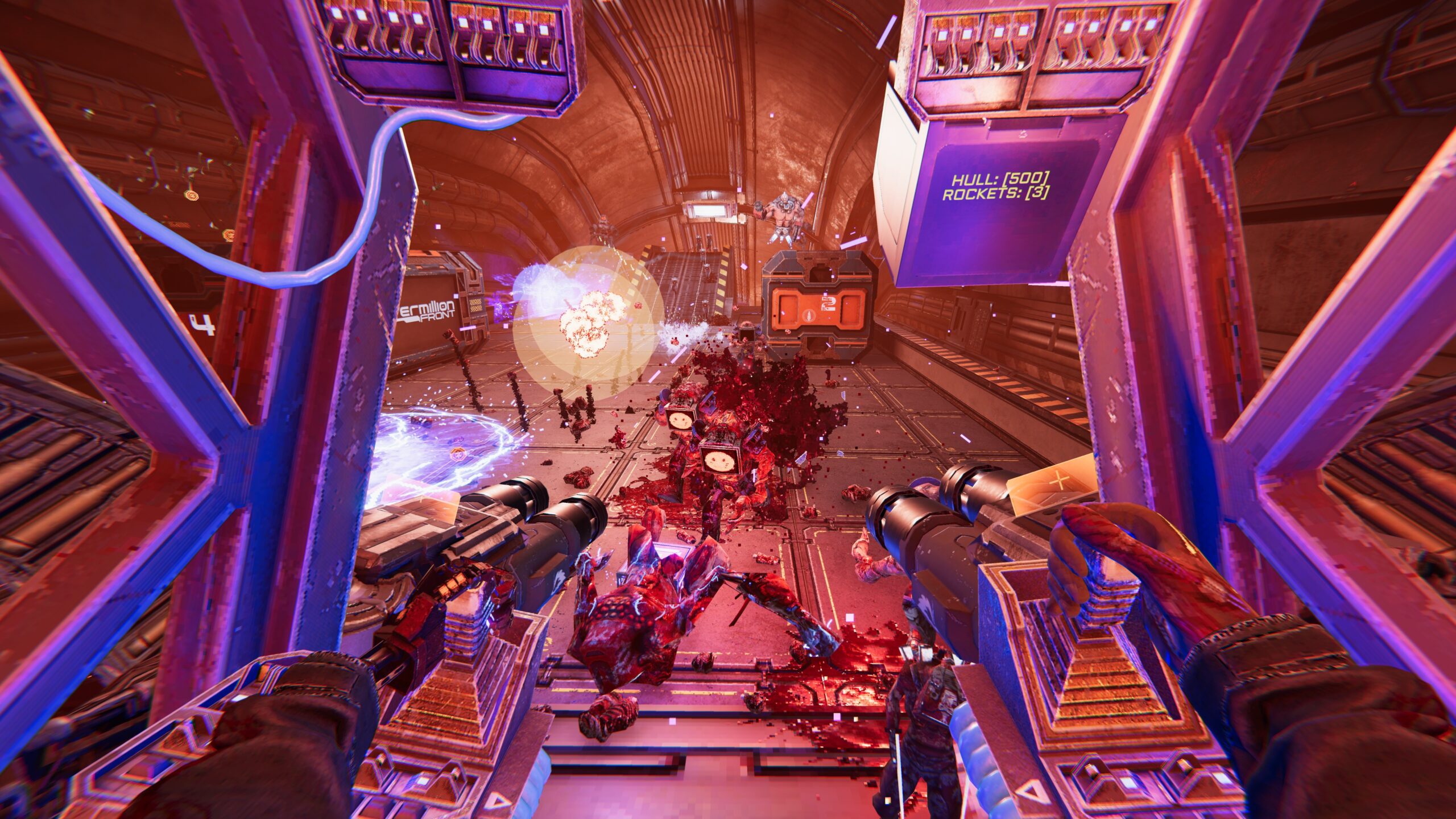
If 90s shooters were fast, then this game is a blur, with everything cranked past the redline. From Johnny Turbo’s sprint slide-dashes and chainsaw takedown kills, to the relentless waves of enemies that never let you rest. And despite the constant frenetic action and chaos on screen, the game never faltered, stuttered or slowed down in the slightest. The action remained buttery smooth, and the haptic feedback on the controller gave each weapon a mechanical punch.
After coming off of RoboCop: Rogue City – Unfinished Business, where you move like an indestructible tank, and complemented by methodical and precise shooting, this was like a shock to the system. The complete opposite experience; RoboCop rewarded patience, Turbo Overkill demands velocity and aggression. The pace is so ferocious, in fact, that I had to lower the difficulty. Not because the enemies were too hard, but the game moved faster than my puny brain could process. Lowering the difficulty to easy literally slows down the game’s speed, allowing more reaction time for the player. Even the camera sensitivity settings were high by default. One slight flick of the thumbstick would whip me in a completely new direction. But once I was able to slow things down a tad, I was tearing ass without the trouble of taking names. It’s a delirious dance of bullets, blood, cybernetics, and speed.
Polygonal Carnage
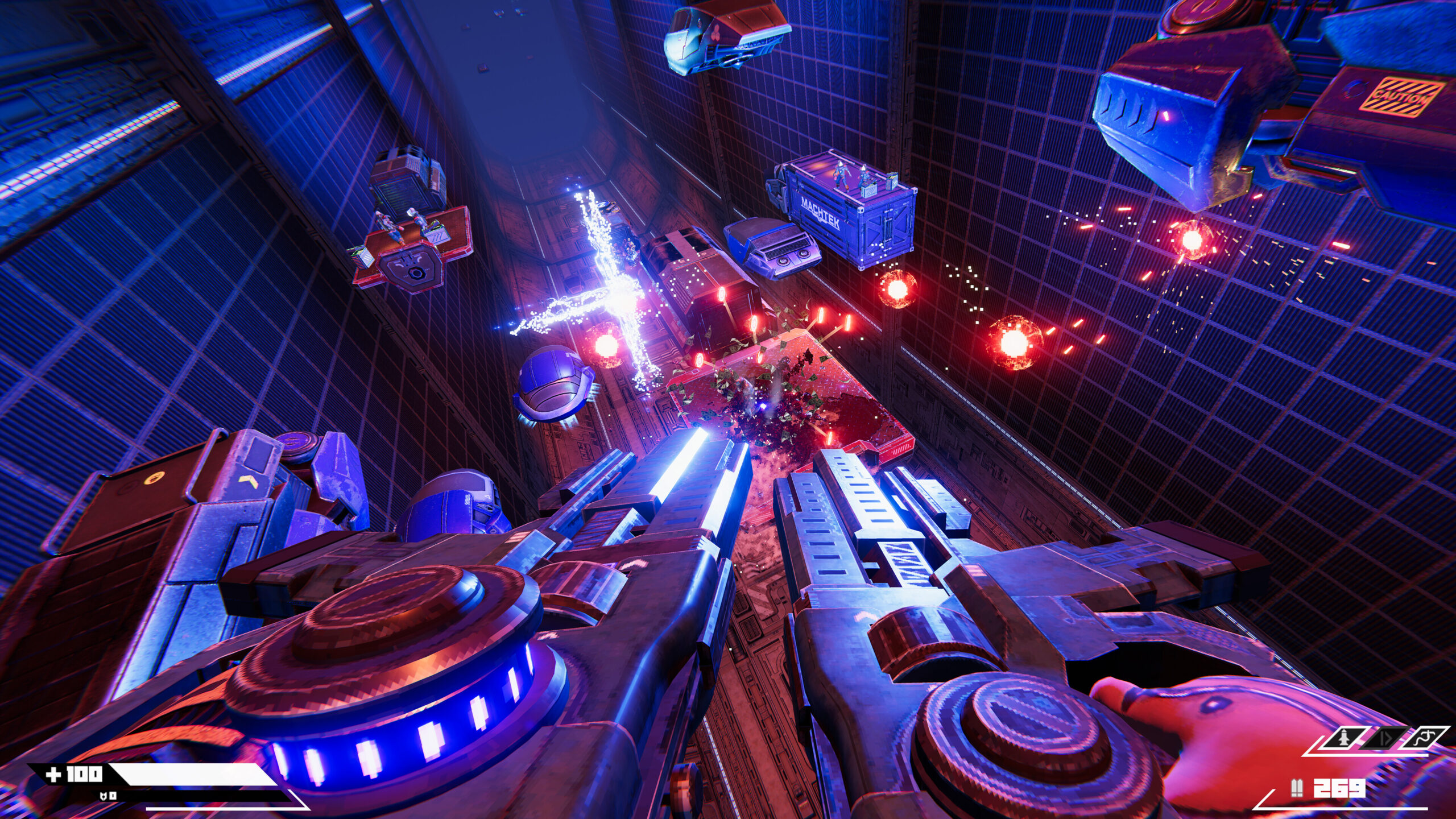
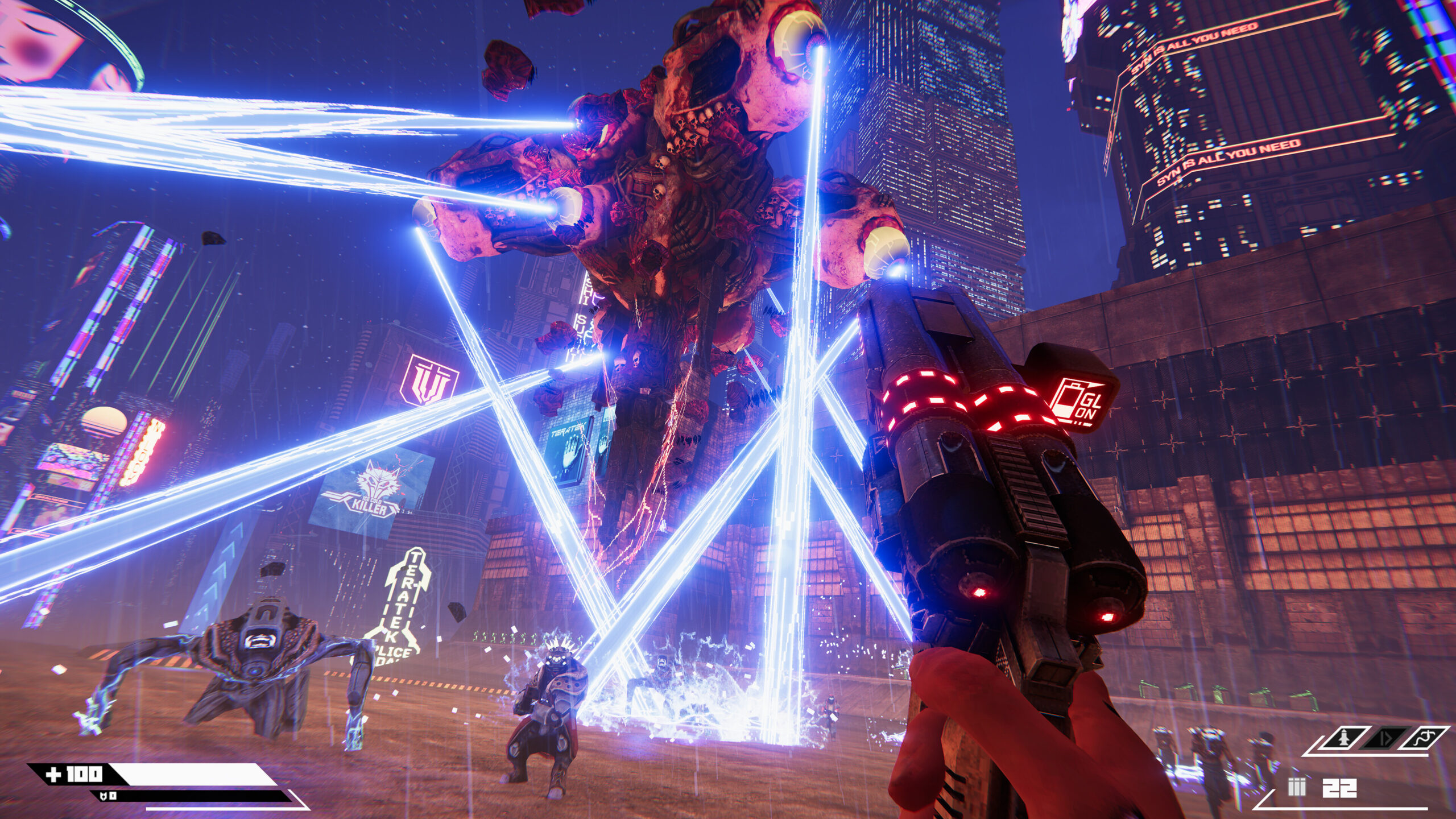
This game doesn’t strive for realism, and while most would compare it to Doom, the graphics are more comparable to Quake. As Doom and Wolfenstein used clever tricks to give the illusion of three dimensions, Quake was a true 3D experience with actual depth and geometry. But where Quake’s aesthetic leaned into supernatural, Lovecraftian mysticism, Turbo Overkill trades it for a dystopia of circuitry and neon. Paradise is a city filled with rain-soaked alleyways, colorful glowing billboards, and walls that absorbed decades of violence.
I appreciate that Turbo Overkill committed to the early 90s aesthetic instead of sanding it down to satisfy modern tastes. The imperfections and rough edges are part of its charm, a deliberate design choice that compliments the raw energy of the era it embraces. The sound design amplifies that chaos; every shotgun blast hits like thunder, and the synthwave music feels ripped from a nightclub made in 1985 pretending to be 2085. In fact, this definitive edition includes extra goodies, including access to the game’s soundtrack. Turbo Overkill looks and sounds exactly like it plays: fast, loud and totally wired.
System Reboot
Turbo Overkill is even more proof that nostalgia doesn’t automatically equal regression. It channels the spirit of shooters of yore without being trapped by it. This is a game that understands what made those PC classics great; the speed, the spectacle and reckless fun, then ratchets it up to 11. It’s brutal, stylish, and unrelenting in its devotion to chaos.
Even when I had to tweak the difficulty and slow things down just to keep my bearings, I never wanted to stop playing. There’s a certain purity to its design, a confidence in knowing exactly what it is and refuses to apologize for it. Turbo Overkill might not be for everyone; it’s relentless and disorienting, but for those who grew up chasing high scores and fine-tuning KDRs in deathmatches on a bulky beige PC, it’s an adrenaline rush jabbed straight into the heart.
This review is based on a PlayStation copy of Turbo Overkill provided by UberStrategist for coverage purposes. It is also available on Xbox, Nintendo Switch and PC via Steam.
Turbo Overkill
$24.99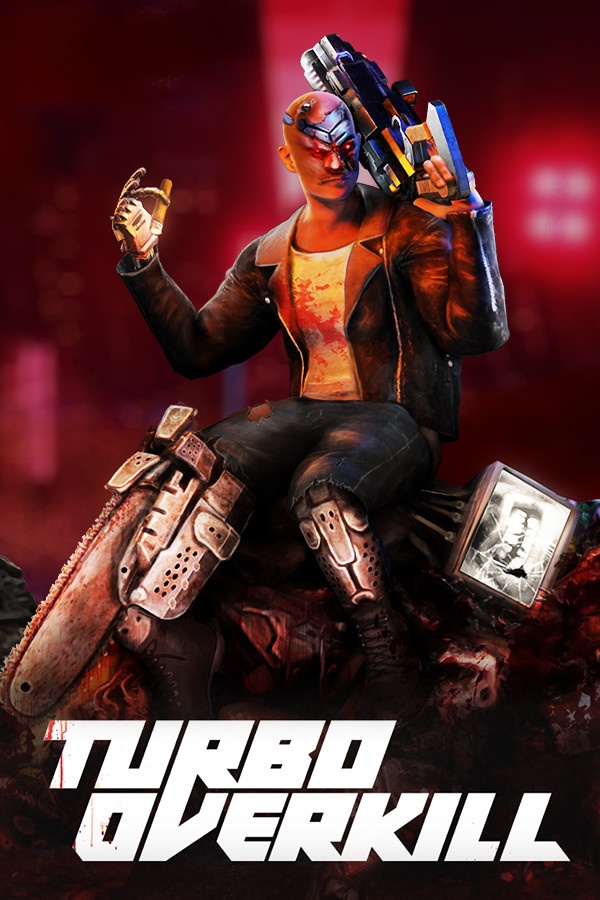
Pros
- Stylish retro visuals with modern flair.
- Satisfying arsenal and movement system.
- Soundtrack and audio amplify chaos.
Cons
- Game runs too fast at breakneck speed by default.
- Story takes a back seat.