
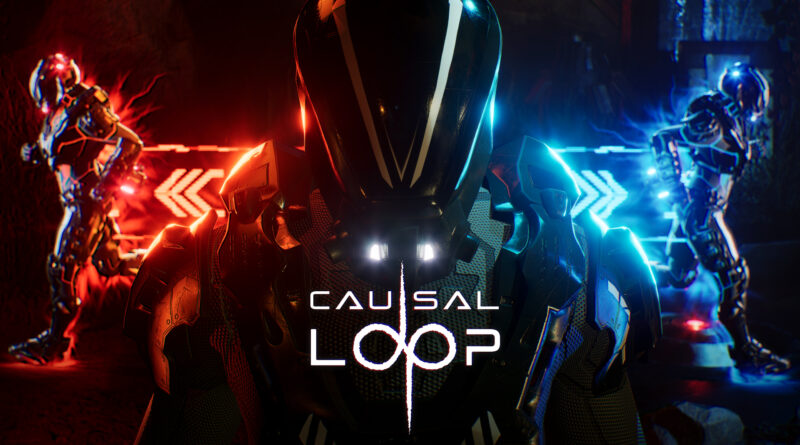
Causal Loop | PC Review
Portal influenced many similar physics-based puzzle games about spatial manipulation. Oddly, I only played Portal last year and haven’t tried the sequel yet. Still, I reviewed two games for The Gaming Outsider, The Entropy Centre and System of Souls, which were inspired by Portal before I even played it. Now that I have played it, I see why it inspired so many games, and I’m now looking for others, like Causal Loop from Mirebound Interactive. With this in mind, here’s how Causal Loop stands out: it’s clearly influenced by Portal, but its sci-fi world and unique gameplay make it an interesting part of the physics-based puzzle genre.
Actions Have Consequences
In Causal Loop, you play as Bale, an exo-archaeologist who arrives on Tor Ulsat to study the ruins of the lost Tor species. He is accompanied by his colleague Jen, an exo-linguist, and Walter, a spherical AI companion that assists Bale and Jen. While investigating an ancient device, the Chronolith, Bale accidentally activates it, trapping him and Walter in a world where time loops and echoes blend together while Jen disappears. He then meets Nala’Tor, a mysterious figure who is a Tor and helps guide you to fix this endless loop and to find Jen. But can he be trusted?
The story maintained my engagement throughout the fifteen chapters. Each chapter revealed very little at a time, but answered just enough to keep me intrigued and eager to continue. In particular, the mystery of Nala’Tor and his intentions served as the main driver of this intrigue. I found myself constantly wondering: Was he actually helping you, or was he leading you only to benefit himself? And who exactly was this Nala’Tor, The Observer?
By design, Bale is a frustrating character who makes rash decisions that affect those around him. And while Walter may feel similar to Wheatley from Portal, the banter between him and Bale was both funny and, at times, emotional. Daniel Caouette and Ryan Cooper did a fantastic job as the voice actors for Bale and Walter, respectively.
Branching Echoes
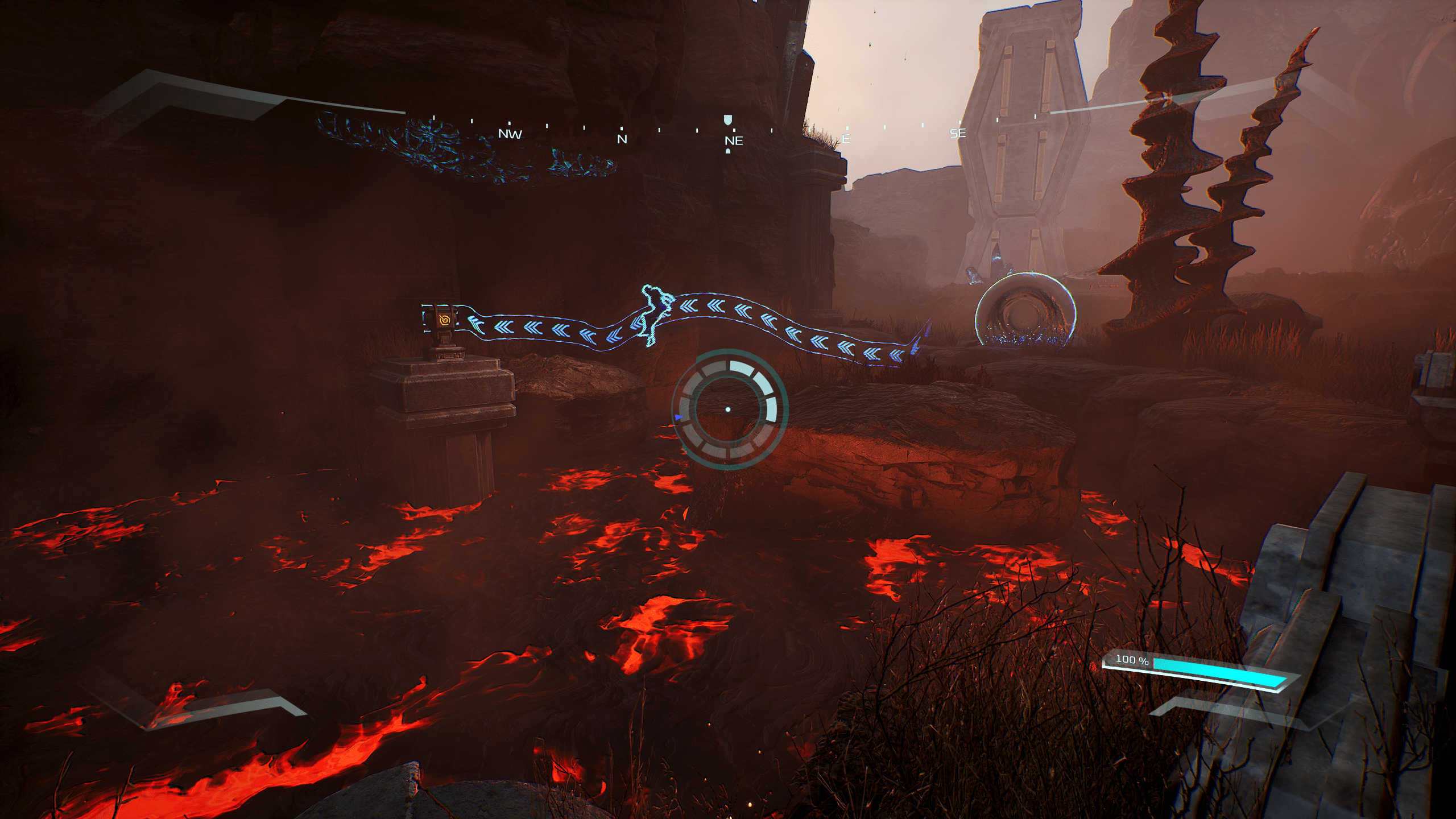
Causal Loop uses physics-based puzzles. After Bale activates the Chronolith, he can make branching echoes to flip switches, reach new areas, clear paths for other echoes, or create cube keys for alien systems. Each echo has a limited time to interact before the loop ends, and the time varies with the environment.
Building on this, like many physics-based puzzle games, Causal Loop increases complexity over time to keep the gameplay engaging. At first, you can only branch one echo, but eventually you can branch up to three echoes. These echoes leave trails behind them, and they cannot cross paths, so you need to be calculated with the route you use for each echo. There are also barriers that Bale can advance through, but echoes will cancel if trying to cross, so you have to time hitting switches in order for your echo to advance.

Reflecting on the game’s difficulty, I shared on Episode 599 of The Gaming Outsider that the experience up to chapter nine was fairly easy. While the difficulty could have ramped up sooner, chapter nine marked the point where puzzles became more complex. Before this, puzzles were simple, but chapter nine provided my first true “a-ha” moment and the satisfaction of cracking a tougher challenge. The difficulty continued to build, and, fortunately, the game offers minimal hints to guide players. Chapters twelve and fifteen presented nearly impossible puzzles, and relief followed their completion.
However, beyond the puzzles’ complexity, one frustrating aspect that made those final chapters more difficult was their reliance on cube-shaped key puzzles. These puzzles often required throwing a key to another area or catching one shot at you. Two main issues contributed to the frustration: first, the cubes did not roll predictably, making them difficult to grab; second, the throwing mechanic lacked precision, so aiming was unreliable. Since these keys exploded after a certain amount of time, I often had to retry several times before completing the puzzle, making it feel more like a design flaw than a test of problem-solving skills.
A Stunning Sci-Fi World
When I first started Causal Loop, I was amazed by how well the world was made. The planet of Tor Ulsat is strange and empty, giving it a mysterious feel. Bale and Jen’s black suits look cool. Gates, portals, and echoes are bright and stand out against the darker world. The sounds are also great, especially when you hear more echoes of Bale, which makes things feel even stranger.
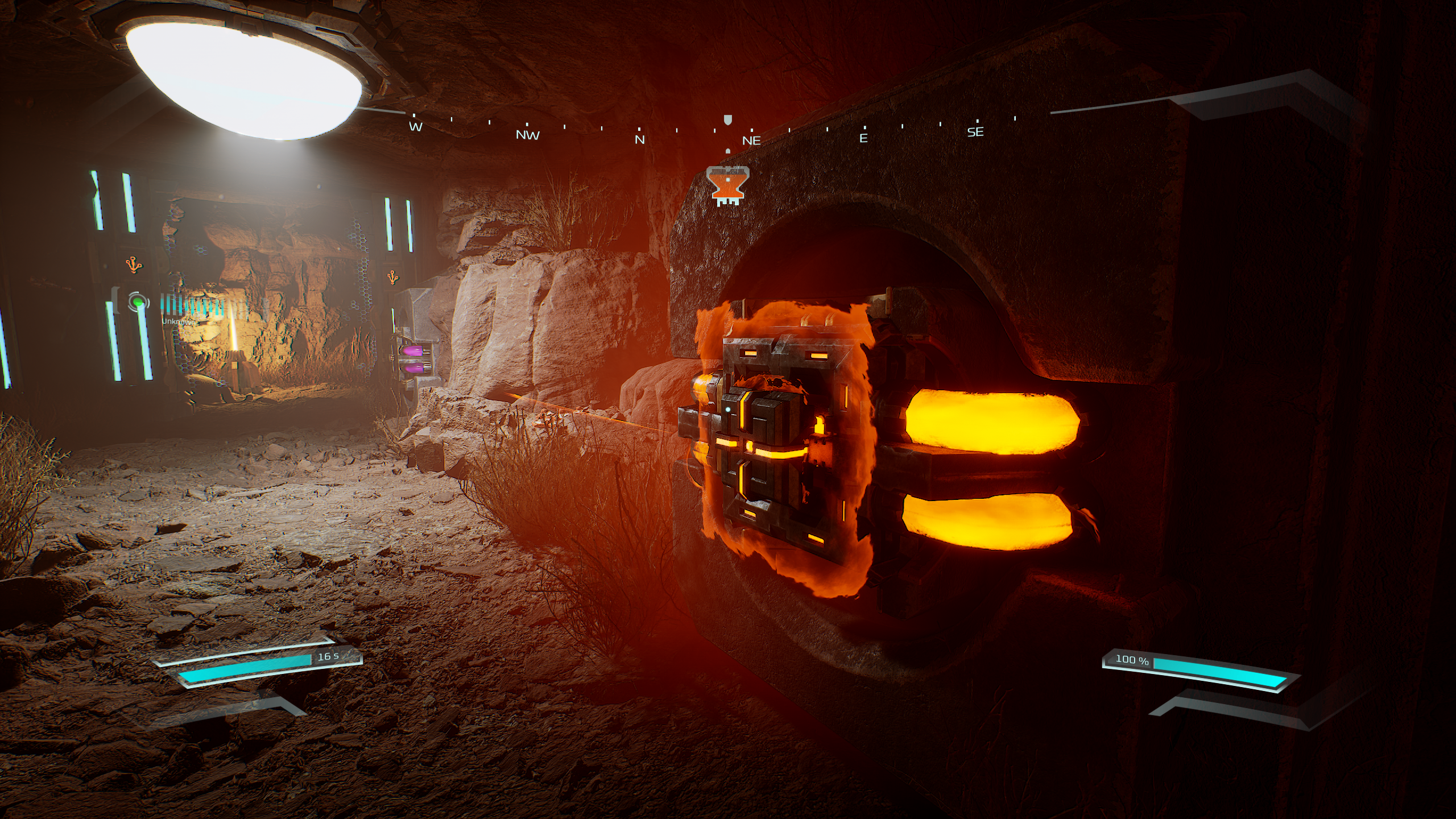
Overall, the game ran well on the Steam Deck. I only noticed some frame rate drops in the later chapters when the puzzles got more complex. These drops weren’t game-breaking and lasted just a few seconds, but they stood out.
Final Verdict
Causal Loop might give you an initial impression of being a Portal-like, but it definitely has its own identity. It delivers an engaging story set on an eerie alien planet, with incredible visual design. While the physics-based puzzles take some time to ramp up, they eventually provide a satisfying gameplay loop—except for the interaction with the cube-shaped keys, which feels less polished. Overall, the game plays fantastically on the Steam Deck, aside from occasional frame rate drops. Initially, I might not have been sold on it during our podcast discussion. However, after completing the game in about twelve hours, I can confidently say Causal Loop is a must-play for puzzle fans and a great value at $19.99.
To hear me talk more about Causal Loop, be sure to listen to the May 21st, 2026 episode of The Gaming Outsider Podcast around the 1:28:43 time stamp.
This review is based on a PC copy of Causal Loop provided by Off Base for coverage purposes. The game is also available on Xbox and PlayStation.
Causal Loop
$19.99
Pros
- Engaging sci-fi story
- Great voice acting
- Progression of difficulty to deliver a satisfying feeling of solving a puzzle
- Excellent video and audio design
- Overall, great to play on the Steam Deck
Cons
- Long time for difficulty to ramp up
- Throwing mechanic lacks tight controls